
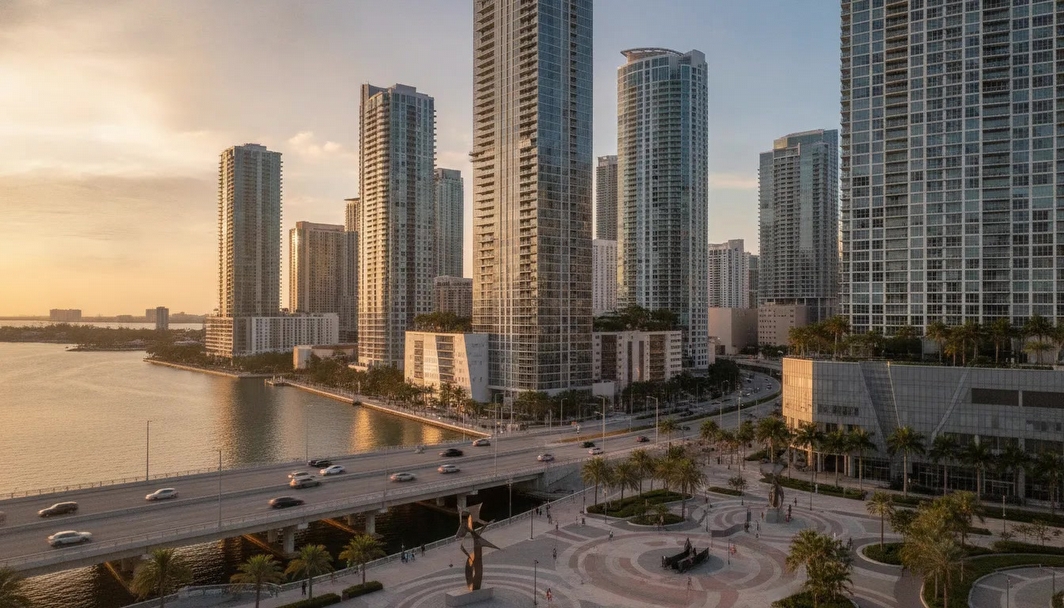
Brickell Miami Real Estate Luxury Condos Guide
Brickell Miami real estate luxury condos attract finance professionals who want a short commute, a polished urban setting, and a residence that can support demanding work and investment decisions. The right purchase is not simply the tallest tower or the newest lobby. It is the building, unit, association, and location that fit your use of Miami.
Schedule a consultation with The Maya Vander Group for a private Brickell search shaped around your priorities.
Why Brickell Is Miami's Financial District and Luxury Living Hub
Short answer: Brickell combines Miami's strongest concentration of finance, technology, restaurants, hospitality, and luxury condominium living. For professionals, the neighborhood offers an urban routine with walkable destinations and quick access to downtown, the airport, Coconut Grove, and Miami Beach. Its condo stock ranges from practical city residences to full-service waterfront homes.
Brickell is often called Miami's financial district because its office towers, banks, private equity firms, wealth managers, law firms, and technology companies anchor the urban core. That professional identity shapes the residential market. A buyer may be comparing not only a view and a floor plan, but also a morning commute, a client dinner location, airport access, privacy, and the ability to use the home as a primary residence, second home, or investment.
The neighborhood also has a distinct rhythm. Brickell Avenue, Brickell City Centre, Mary Brickell Village, and the bayfront create a dense network of dining, retail, fitness, hotels, and services. A resident who values urban convenience can accomplish more without driving than in many other Miami neighborhoods. The tradeoff is that Brickell feels active and vertical. Buyers who want a large yard, a quieter street, or a more residential pace may prefer another market.
For a finance professional relocating from New York or another high-tax state, Brickell can provide continuity without copying Manhattan. The skyline is familiar, but the environment is different: waterfront promenades, outdoor living, tropical weather, and a condominium market with its own insurance, reserve, assessment, and building-management considerations. The broader relocation context belongs in The Maya Vander Group's guide for high-earners relocating to Miami.
Brickell is not one uniform product. The west side near the Metrorail and Financial District can feel more connected to offices and transit, while bayfront addresses can emphasize water views, private amenities, and a quieter arrival. Brickell Key offers an island setting within the larger Brickell ecosystem. Each micro-location can change the daily experience, resale audience, and rental profile.
Brickell Real Estate Market Overview: Prices and Inventory
Short answer: Brickell pricing is best understood by building, view, floor, size, condition, and association economics rather than by one neighborhood average. A current market brief for this guide identifies 215 Q1 2026 closings and a neighborhood price-per-square-foot benchmark. Buyers should use current comparable sales and active inventory to test any asking price.
Search results often answer the question "What is the average price of a condo in Brickell?" with a single number. That answer can mislead a serious buyer. A renovated high-floor residence with protected water views, a newer full-service building, an older unit with deferred maintenance, and a turnkey pied-a-terre can all sit under the same Brickell label while carrying very different economics.
The market snapshot cited in the assignment research gives professionals a useful starting point, not a substitute for underwriting. It places Brickell at 215 Q1 2026 closings and provides a time-specific price-per-square-foot benchmark. Before making an offer, compare recent closed sales with similar exposure, building age, renovation quality, parking, storage, view protection, and association obligations.
Inventory also needs to be read at the building level. A large number of available units may reflect several listings in one tower, repeated listings with different agents, or units that are not truly comparable. A focused search should separate:
- Waterfront and bayfront residences from interior urban views.
- Newer construction from older buildings with different reserve and maintenance profiles.
- Turnkey units from residences requiring renovation or furnishing.
- Primary-residence stock from units subject to rental, pet, occupancy, or renovation rules.
- Full-service buildings from associations with a lighter amenity package and different monthly costs.
Price per square foot is useful when paired with the total cost of ownership. Monthly association dues, insurance structure, property taxes, parking, storage, utilities, capital projects, and possible assessments all affect the real carrying cost. A lower purchase price can lose its advantage if the unit needs extensive work or the association is facing a large project.
For live availability, buyers can begin with the Maya Vander Group property search, then narrow the results using the building and financial criteria that matter most. Listing data is a starting point for a conversation, not a replacement for reviewing the association documents and recent comparable sales.
Connect with The Maya Vander Group to compare current Brickell inventory by building, view, condition, and intended use.
The Best Luxury Condo Buildings in Brickell for 2026
Short answer: The best Brickell condo depends on the buyer's operating brief. Waterfront buildings can prioritize views and privacy, while central towers may prioritize walkability and office access. Established addresses can offer a mature neighborhood experience, while newer buildings may offer newer systems and amenities. Compare the association, unit, and management, not only the brand name.
A finance professional may begin with a list of recognizable buildings, but a strategist starts with the intended use. Is the home for a full-time move, a weekday base, a family residence, a seasonal retreat, or a rental investment? The answer changes the ideal building. It also changes the importance of rental rules, guest policies, parking, storage, concierge operations, and the building's tolerance for owner renovations.
Waterfront and bay-oriented residences
Waterfront buildings can deliver the visual experience many buyers associate with Brickell, including open Biscayne Bay views, sunset light, and a stronger sense of separation from the busiest streets. The premium is not only aesthetic. Exposure, floor height, balcony design, glass condition, storm protection, and future construction around the view all deserve review.
The Mandarin Oriental Residences Brickell Key is a useful example of how a project-specific page serves a different intent from this guide. A building page can explain its own residences and positioning. This article remains the neighborhood-level decision framework for comparing Brickell options.
Central towers for a high-efficiency routine
Central Brickell towers can suit buyers who prioritize office access, walkability, restaurants, and a shorter daily radius. A central address may reduce dependence on a car, but street activity, loading patterns, traffic, and the relationship between the unit and the amenity deck should be evaluated in person. A polished lobby does not answer questions about sound, elevators, staffing, or long-term maintenance.
Established buildings versus newer construction
Established buildings can offer mature landscaping, known management histories, and a record of completed repairs. Newer construction can offer current finishes, modern amenity programming, and newer systems, but buyers still need to review the association's budget, reserves, warranties, insurance, developer transition, and operating history. New does not mean risk-free, and established does not mean outdated.
| Decision factor | Questions for the buyer | Why it matters |
|---|---|---|
| Location within Brickell | How will you reach work, the airport, schools, restaurants, and the waterfront? | A few blocks can change traffic, walkability, noise, and resale appeal. |
| Building finances | What do the budget, reserves, insurance, and recent meeting minutes show? | Association health affects carrying cost, assessments, lending, and confidence. |
| Unit quality | What work is needed, and are permits and renovation rules clear? | A beautiful presentation can hide a meaningful renovation budget. |
| Use and flexibility | Are rentals, pets, guests, occupancy, and short-term use allowed? | Rules shape both lifestyle fit and future exit options. |
The Lofty Brickell page shows why building-level research matters. A project page can answer questions about one address, while a neighborhood guide helps a buyer decide which addresses deserve a closer look. That distinction protects the search from becoming a tour of attractive but mismatched buildings.
Brickell vs Coconut Grove: Which Neighborhood Fits Your Lifestyle?
Short answer: Brickell suits buyers who want an urban, walkable, professionally connected lifestyle with high-rise convenience. Coconut Grove suits buyers who want more greenery, a neighborhood feel, and a calmer residential rhythm while remaining close to Miami's core. Neither is universally better. The right choice depends on commute, privacy, outdoor space, building type, and daily habits.
The comparison is especially relevant for a finance professional who can work from Miami but does not want to spend every day in a tower. Brickell offers immediate access to business, dining, hospitality, and transit. Coconut Grove offers mature trees, waterfront recreation, village-style streets, and a stronger sense of separation from the central business district. The commute between them can be manageable, but the living experience is meaningfully different.
| Priority | Brickell tends to fit when... | Coconut Grove tends to fit when... |
|---|---|---|
| Workday | You want the shortest practical path to the financial district. | You accept a longer commute for a more residential setting. |
| Home environment | You prefer concierge service, amenities, views, and vertical living. | You prefer trees, outdoor space, and a village-like pace. |
| Social routine | You want restaurants, hotels, and events close to home. | You value local gathering places and a neighborhood community. |
| Property type | A luxury condominium is the preferred format. | A condominium, townhome, or single-family home may fit. |
The decision should be tested with a real schedule. Visit both neighborhoods during a weekday commute, after work, and on a weekend. Walk the route to the places you expect to use. Review parking and guest logistics. Ask whether your idea of luxury is service and proximity, or space and privacy. The best neighborhood is the one that remains compelling after the first impression fades.
For a broader view of Miami's neighborhood choices, explore the Maya Vander Group communities hub. It can help place Brickell and Coconut Grove within a wider search that includes Coral Gables, Miami Beach, Key Biscayne, and other established Miami markets.
Schedule a consultation with The Maya Vander Group to compare Brickell and Coconut Grove through a private, use-based search.
Investment Potential in Brickell: Rental Yields and Market Dynamics
Short answer: Brickell can appeal to investors because it combines employment density, international demand, luxury amenities, and a deep condominium ecosystem. Investment performance still depends on acquisition basis, association costs, financing, taxes, insurance, vacancy, management, and building rules. A high asking rent does not guarantee a strong net return.
Finance professionals usually understand the difference between a headline return and an underwritten return. The same discipline belongs in Brickell real estate. A rental analysis should start with realistic achievable rent for the exact unit, not the highest listing in the building. Then subtract association dues, taxes, insurance, utilities, repairs, management, leasing costs, vacancy, reserves for the unit, and the cost of capital.
Building rules can decide whether a strategy works. Confirm minimum lease terms, annual rental limits, approval procedures, guest registration, furnished rental rules, pet policies, and owner-occupancy requirements. A unit that looks attractive on a listing page can be a poor investment if the association limits the intended use or if the building's approval process creates long vacancies between tenants.
Demand is also segmented. A corporate tenant may value a turnkey unit, reliable internet, a full-service lobby, a gym, and a predictable commute. An international owner may prioritize security, privacy, hotel-style service, and professional management. A local renter may compare the residence with newer buildings in other parts of Miami. The likely tenant profile should inform the building and unit selection before an offer is written.
Market dynamics matter on the exit as well as the purchase. Review the building's resale inventory, days on market for comparable units, price reductions, completed sales, and the supply pipeline nearby. Consider whether a future tower could change views, traffic, construction noise, or the audience for the property. In a vertical market, the next buyer will evaluate the same association documents and operating costs that you review today.
Condo diligence should include budgets, reserve schedules, insurance information, meeting minutes, engineering or inspection materials when applicable, litigation disclosures, pending assessments, and the association's maintenance history. Florida's condominium statute is the governing reference point for many association requirements, and buyers should review the Florida condominium statute with qualified legal and financial advisers. The Maya Vander Group's Florida condo reserve requirements guide provides additional buyer context.
The Maya Vander Group's Miami luxury condo due-diligence guide provides broader buyer education. Its focus is the process of reviewing a luxury condo. This Brickell article applies that discipline to a finance-professional neighborhood decision, without relying on a static asking-price average.
Before relying on a projected yield, ask:
- What is the net operating income after every recurring cost?
- What assumptions are being made about vacancy, repairs, management, and financing?
- Does the association permit the intended rental strategy?
- What reserve, insurance, assessment, or litigation information could change the model?
- Who is the most likely future buyer if the investment needs to be sold?
Schedule a consultation with The Maya Vander Group before you compare Brickell units, projected returns, and building-level risk.
Frequently Asked Questions
What are the most luxurious condos in Miami?
The most luxurious condo depends on the buyer's definition of luxury. In Brickell, buyers commonly compare waterfront exposure, service, privacy, amenities, architecture, unit quality, and association health. A private search should compare those factors across current inventory instead of assuming one building is best for every buyer.
What is the average price of a condo in Brickell, Miami?
There is no single average that accurately represents every Brickell condo. Price changes with the building, floor, view, size, condition, parking, and association economics. A current market brief for this guide cites 215 Q1 2026 closings and a time-specific neighborhood benchmark, but current comparable sales should guide an offer.
Is a condo in Brickell a good investment?
Brickell can be compelling for an investment because of its employment base, amenities, and renter demand, but the answer depends on the unit and building. Underwrite net income after dues, taxes, insurance, vacancy, management, repairs, financing, and assessments. Confirm rental rules and review association documents before relying on a projected yield.
Is Brickell better than Coconut Grove for a finance professional?
Brickell may be the better fit for someone who values proximity to the Financial District, walkability, high-rise services, and an active urban routine. Coconut Grove may be better for someone who wants more greenery, outdoor space, and a quieter residential setting. Test both neighborhoods against the buyer's actual weekday and weekend schedule.
What should I review before buying a Brickell luxury condo?
Review recent comparable sales, the unit's condition and permits, the association budget and reserves, insurance, meeting minutes, assessments, litigation, rental and renovation rules, parking, storage, and future construction nearby. A real estate adviser can coordinate the property search, while legal, tax, insurance, and financial professionals should advise on their respective subjects.
Explore Brickell Miami real estate with The Maya Vander Group and build a search around the residence, building, and investment profile that fits you.
Ready to Explore Luxury Real Estate in Miami?
Don't miss opportunities in one of Florida's most desirable markets. Contact Maya Vander today for exclusive access and personalized service.


