
Waterfront Condos Miami: Buyer Questions Before a Tour
Waterfront condos in Miami are not interchangeable just because a listing shows blue water. This guide helps buyers comparing waterfront condos Miami has to offer look beyond the view. The exact outlook, building, association, costs, and everyday setting can change what ownership feels like. Before choosing which property to tour, define what waterfront means to you, identify what needs verification, and compare each building using the same questions.
Discuss your Miami waterfront condo search
What does waterfront mean at this address?
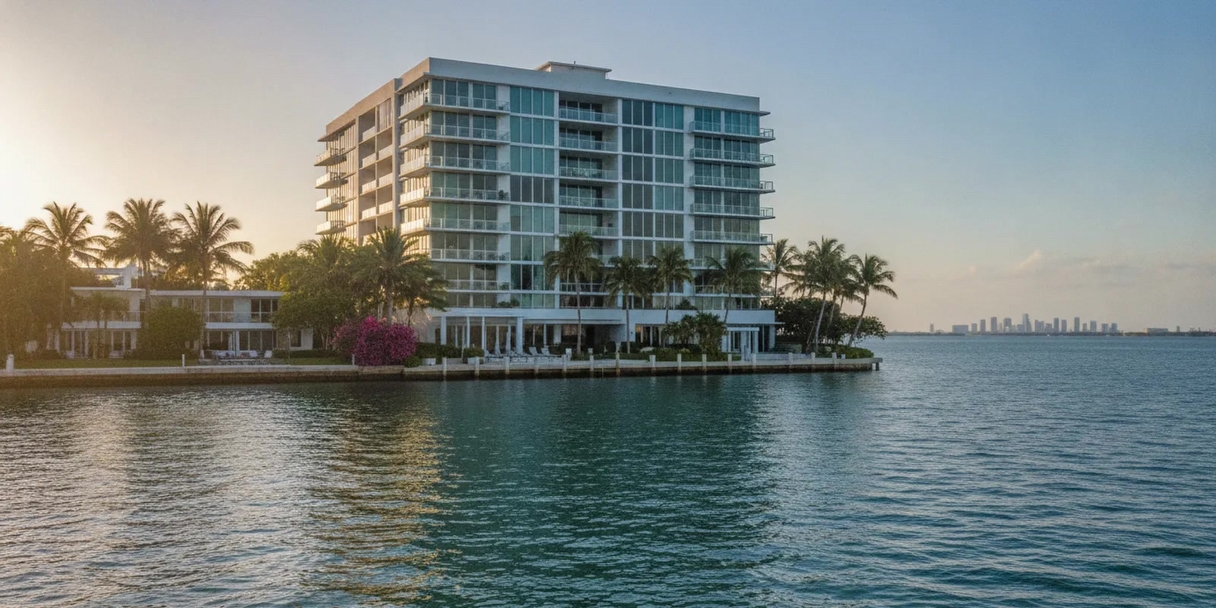
Begin with the waterway and the unit’s position in relation to it. A bayfront, ocean-facing, canal-side, or marina outlook can create a different setting. Even within one building, the view may vary by floor, direction, balcony, and room layout. Ask whether the unit faces open water, a channel, docks, another building, or a shared landscaped area. Confirm the view from the residence itself rather than relying only on a listing image or a photograph taken from a common area.
Make a simple view inventory during a showing or live video tour. Note which rooms face the water, whether the view is direct or angled, and how much of it is visible while seated or standing. Look for factors that shape the experience, such as nearby structures, vegetation, boat activity, roads, or shared facilities. If future construction or a particular view is important to your decision, ask what documentation supports the seller’s or listing representative’s description. Do not treat a view as guaranteed to remain unchanged without evidence.
Confirm the exact address, building, unit, and municipality. Neighborhood descriptions can be broad, while the property’s records and association documents apply to a particular building and unit. Keep the address and the marketing description separate in your notes. If you are comparing Bay Harbor Islands, Miami Beach, Brickell, or another area, do not let a neighborhood label stand in for a check of the property’s actual location and orientation.
Which waterfront setting fits your routine?
A beautiful outlook may be a priority, but it is only one part of the decision. Start with how you expect to use the condo. A full-time resident may care about the drive to work, daily errands, noise, and access to services. A seasonal owner may focus on building rules, maintenance arrangements, and how the unit can be used when away. Someone who plans to spend time on the water may have different questions about access than a buyer who mainly wants a calm view.
List the features you want, then separate them into three groups: essential, desirable, and optional. For example, an essential might be a water view from the main living area; a desirable feature might be a balcony large enough for regular use; an optional feature might be a particular shared amenity. This prevents an attractive but less important feature from outweighing a requirement you will notice every day.
| Setting to compare | Questions to ask | What to verify |
|---|---|---|
| Open bay or ocean outlook | Which rooms face the water? Is the view direct, angled, or partly obstructed? | Unit orientation, floor, balcony layout, and current sightlines |
| Canal or marina outlook | Is boat activity part of the setting? Are docks or water access relevant to your plans? | Whether any facility or access is included, and the applicable rules and terms |
| Water nearby, but not directly in view | What is the actual route to the waterfront, and what is between the unit and it? | Walking route, crossings, access points, and the unit’s own outlook |
| Waterfront setting with shared amenities | Which amenities are available, and are there fees, reservations, or restrictions? | Association documents, current rules, and responsibility for upkeep |
Use the table as a comparison tool, not as a substitute for reviewing the specific property. Distinguish what comes with the unit from facilities controlled by the association or another entity. Ask for written confirmation when an amenity, access right, or included service is part of your decision.
What should you review about the building and association?
A condo purchase involves more than the residence. The association’s governing documents, finances, rules, and maintenance decisions can affect use and future expenses. Request the current materials available for the building. Depending on the property and transaction, these may include the declaration, bylaws, rules, current budget, financial statements, meeting minutes, insurance information, and records about planned or completed work.
Read the documents with your intended use in mind. Ask what regular assessments cover and whether any services are billed separately. Check restrictions that could matter to you, such as leasing, pets, renovations, guest access, or use of common areas. A rule that is immaterial to one buyer may be a deciding factor for another. If your plans depend on a particular use, ask for the governing language and have the relevant professional help interpret it.
Meeting minutes can show what owners or board members have discussed, but a discussion is not the same as an approved project or final cost. Track each item as one of three statuses: reported or discussed, formally approved, or completed and paid. Ask for follow-up records when minutes refer to repairs, proposals, inspections, or funding. A short note that a matter was addressed may not explain its scope or current status.
For a property-specific example in Bay Harbor Islands, the waterfront condo guidance for La Baia South can help you identify questions to ask about a development. Treat project information as an initial reference, then confirm current availability, unit details, association materials, and costs for the residence under consideration.
How can you assess reserves, inspections, and possible assessments?
Ask whether current reserve information is available and what major building components or planned work it addresses. Review it alongside the budget, financial records, and meeting minutes. A reserve balance by itself does not show the full condition of the building or settle whether future costs may arise. Look for the assumptions, timing, and funding decisions behind the figures, and ask what has changed since the documents were prepared.
For Florida condominiums, request records relevant to structural integrity reserve studies and milestone inspections where applicable. Requirements depend on the building and current law, so do not assume a particular report is required, completed, or sufficient based only on a listing statement. Ask which records exist, their dates, what follow-up work is documented, and whether the association has made related funding decisions. Have qualified professionals review technical or legal questions.
Be precise when asking about assessment exposure. Separate a possible future expense from an assessment under discussion, one formally approved, an amount billed, and a payment already made. Ask whether any special assessment has been proposed or approved, what it covers, how it is allocated, and what the current payment status is. Then request an updated confirmation at an appropriate point in the transaction, since association records and balances can change.
Coastal context also belongs in a buyer’s research, but it should be checked for the specific property rather than inferred from a general article or neighborhood label. Yale Environment 360 has reported on rising seas and Miami’s continued development near the water in its discussion of Miami development and rising seas. Use such broader context as a reason to ask informed questions, not as a conclusion about an individual building. Review the property’s applicable records and seek qualified advice on exposure, insurance, and condition.
What costs belong in a waterfront condo comparison?
Compare more than the purchase price and monthly assessment. Build a property-specific estimate from verified figures. Depending on the residence, items may include taxes, insurance, utilities, association assessments, parking or storage charges, maintenance, and any proposed or approved assessment. Ask what the regular assessment covers, which expenses are separate, and whether a stated amount is current. Avoid treating an estimate from another building as a reliable figure for this one.
Condominium closing costs in Miami are typically presented as a range of 2% to 5% of the purchase price, but the actual amount depends on the transaction. Request an itemized estimate based on the property and purchase structure. Keep one-time transaction expenses apart from recurring ownership expenses and uncertain future costs. When comparing two residences, use the same categories and time period for each so that the totals mean the same thing.
- Recurring costs: Record the current assessment, what it includes, and any separately billed services or facilities.
- Transaction costs: Request an itemized closing estimate and confirm which charges apply to your purchase.
- Condition and maintenance: Review available inspection findings and association records for work that could affect your plans or budget.
- Uncertain costs: Keep proposed projects and assessment discussions marked as unresolved until current records establish their status.
A useful comparison sheet has a column for the amount, one for its source, and one for its status. For instance, label an assessment figure “current budget,” “seller estimate,” or “awaiting confirmation.” This makes it easier to spot when two properties appear comparable only because one has missing information. It also gives your lender, attorney, insurance professional, or inspector a clear list of questions within their area of expertise.
How do you test lifestyle fit before a tour?
Map the routines you expect to repeat. Consider access to work, schools, shops, dining, medical care, parks, and transportation that matter to you. Check actual routes at times you are likely to travel. A waterfront address can offer the setting you want while still involving trade-offs in commute, parking, or access to everyday services. Decide which of those trade-offs are acceptable before the view becomes the only thing you remember.
During a tour, observe the building as well as the unit. Notice arrival, elevators, common areas, noise, parking arrangements, and the route from the entrance to facilities you expect to use. Ask which amenities are available to residents, whether reservations or fees apply, and what rules govern access. If you cannot visit, request a live video walkthrough that shows the unit’s outlook and the route through the building rather than only a prepared room-by-room presentation.
Think through an ordinary day, not only a vacation day. Where will you enter the building with groceries? How will you handle deliveries, visitors, and parking? If you expect to work at home, consider noise and the position of the rooms you will use. If the condo is a seasonal residence, ask how the association handles routine building communication and what arrangements are available for maintenance while you are away. Confirm answers in the documents or with the appropriate source.
To browse homes by location and property type, use the group’s property search. For more context on the areas served, review the Miami communities guide. These pages can help organize an initial search, while property-level details still need confirmation.
How should you compare two waterfront condos?
Use one consistent checklist for every option, even if one property makes a stronger first impression. Record the unit’s orientation, rooms with a water view, usable outdoor space, association information, recurring costs, intended-use rules, and access to daily essentials. Mark each point as confirmed, pending, or unknown, and note who supplied the information. That record helps separate a documented difference from a sales description or personal impression.
- Set priorities before touring. Decide what matters most: a direct water outlook, quiet, outdoor space, location, building facilities, or a particular use.
- Request comparable records. Ask for the same categories of association and cost information for each building.
- Separate evidence from impression. A polished presentation is not proof of building condition, legal status, or future costs.
- Assign open questions. Direct each question to the right source, such as the association, seller, lender, inspector, attorney, or insurance professional.
- Revisit the trade-offs. Compare documented facts with the way you expect to live in or use the property.
For example, imagine one unit has a more dramatic view while another has clearer association records and a layout that better fits your daily routine. Do not decide from the view alone or assume that one advantage cancels an unresolved issue. Record what is known, request the missing material, and compare the options again when the evidence is available. A buyer’s representative can help organize property questions, coordinate the search, and negotiate within the buyer’s instructions. Legal, tax, engineering, insurance, and inspection advice should come from the appropriate specialists.
What should you ask before scheduling a tour?
- What is the exact unit orientation, and which rooms have a water view?
- Which features belong to the unit, and which are association or separately controlled amenities?
- What current records are available for the association’s budget, reserves, insurance, and planned work?
- Are relevant inspection or reserve-study records available, and what follow-up is documented where applicable?
- Have assessments or major projects been discussed or approved, and what is their current status?
- What rules or additional costs could affect my intended use?
- Which statements about the unit, building, view, and amenities can be confirmed in writing?
Clear answers help you decide whether a tour is worthwhile and what to request next. If a document is not yet available, keep the question open rather than treating silence as confirmation. A thoughtful review is not about eliminating every uncertainty; it is about understanding which facts are established, which remain unresolved, and whether the property still fits your priorities.
For background on the group and its approach to Miami real estate, see about the Maya Vander Group. Bring your priorities and open questions to a consultation before narrowing your tour list.
Plan a focused waterfront condo consultation
When you assess waterfront condos in Miami through the setting, the records, the full cost picture, and the rhythm of daily life, you can make a more grounded choice about which property deserves a closer look.
Ready to Explore Luxury Real Estate in Miami?
Don't miss opportunities in one of Florida's most desirable markets. Contact Maya Vander today for exclusive access and personalized service.
© 2026 THE MAYA VANDER GROUP. All Rights Reserved. Trademarks and brands are the property of their respective owners.


