
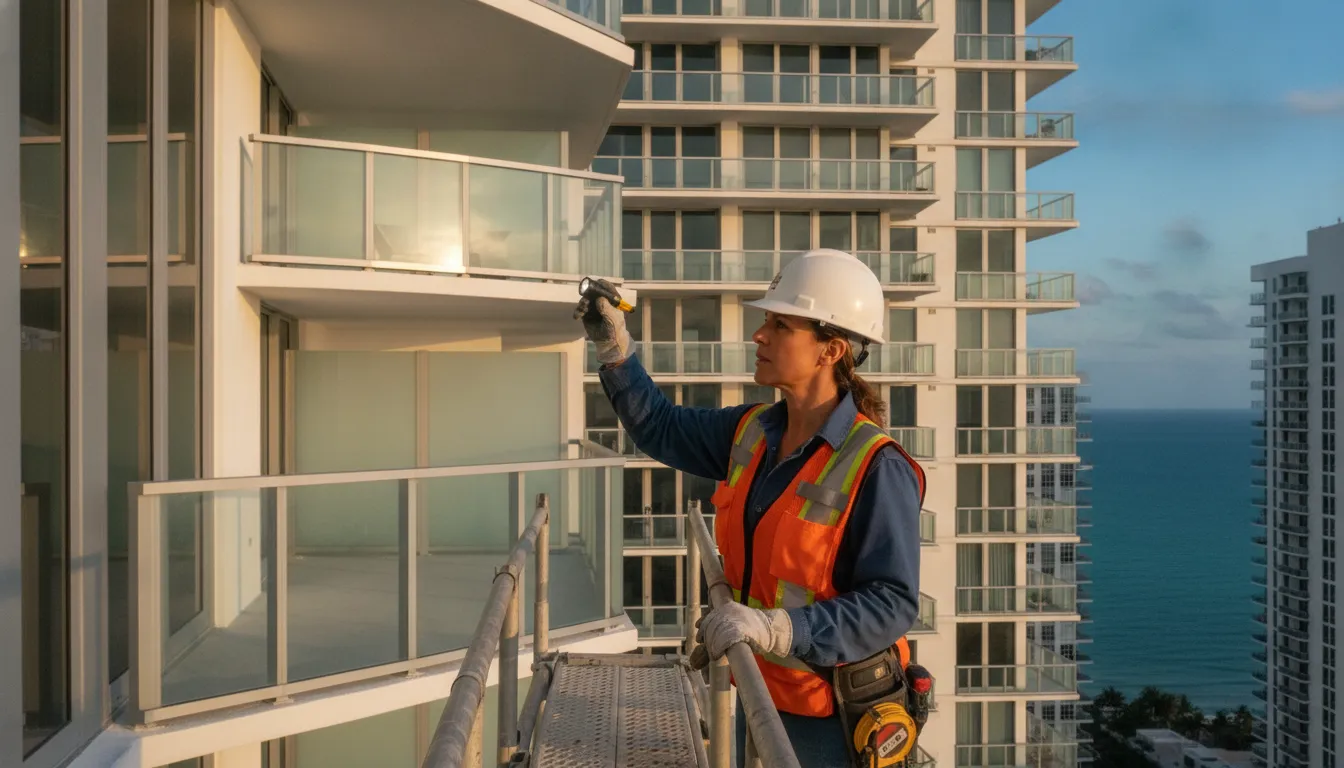
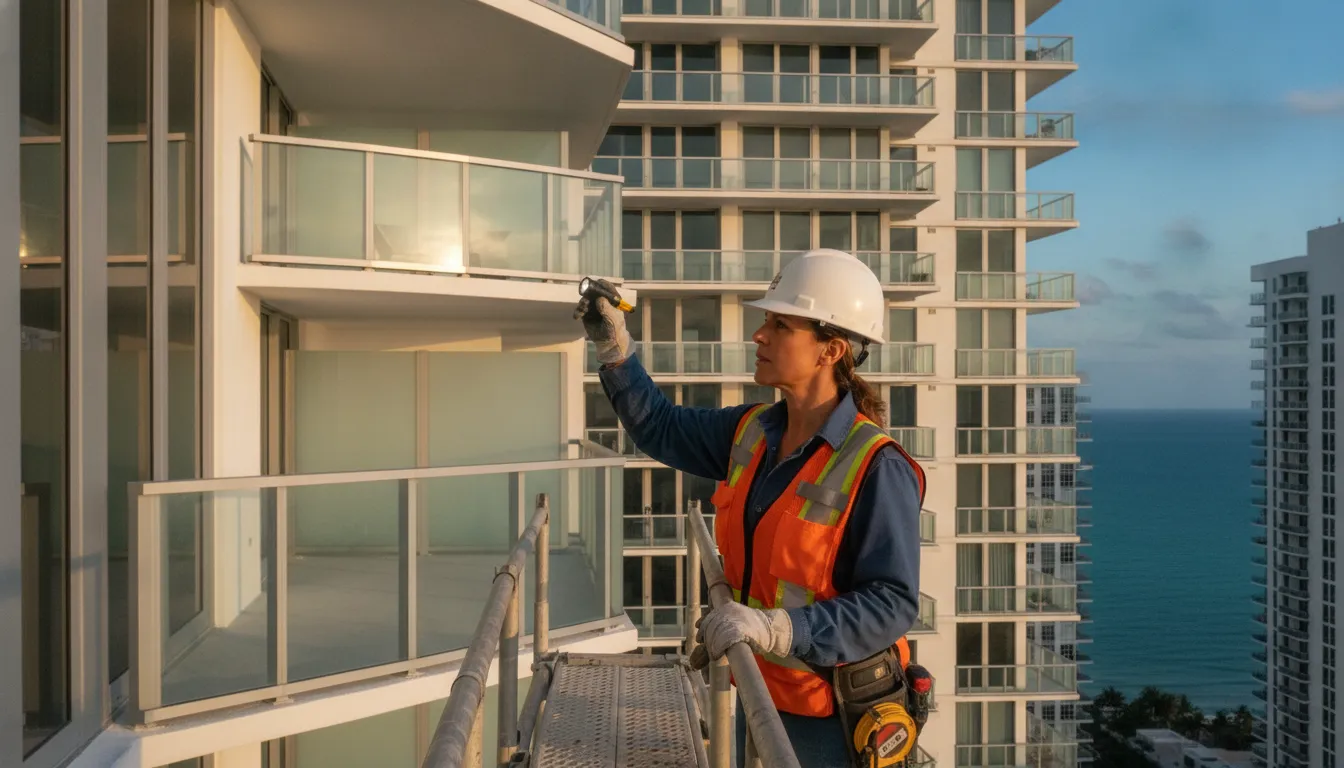
Florida Condo Milestone Inspection Requirements for Buyers
A pristine oceanfront view cannot offset the structural risk of an aging Miami high-rise. New Florida laws now require condo boards to verify building safety and fund critical repairs. In this new legal climate, buyers must check safety reports before they sign a purchase contract.
Schedule a consultation with The Maya Vander Group to review a building's compliance and inspection history before you make an offer.
Florida condo milestone inspection requirements mandate that condominium and residential cooperative buildings three stories or taller must undergo structural inspections by a licensed engineer. These safety reviews occur once a building reaches thirty years of age. Or twenty-five in coastal areas determined by local enforcement, with recurring inspections required every ten years thereafter. Under the 2026 legal framework, qualifying buildings must submit structural findings to local enforcement agencies and share the results with unit owners. And substantial structural deterioration triggers follow-up repair obligations. For buyers in Brickell or Miami Beach, reviewing this building record is an essential due diligence step before closing.
To protect your budget, you need to understand how these physical checks affect your investment. Our guide to Florida condo safety and reserve requirements provides the full context. Let us begin with what a milestone inspection is and why it matters for buyers.
What Is a Milestone Inspection for Florida Condos?
A milestone inspection is a structural check designed to keep buildings safe over time. Under Florida law, this process is a detailed scan of a building's load-bearing walls and supports. The state created this program to prevent major structural failures in aging buildings. This check ensures that older high-rise homes in Miami-Dade County remain secure for all residents.
Structural safety focus
A licensed engineer or architect must perform this work. These experts look at primary structural systems and load-bearing walls to verify their strength. They do not check if a condition fits modern building codes. Instead, they look for any deep wear, cracks, or flaws that could put lives at risk.
This safety check has two separate stages. Phase One is a visual scan of the walls, columns, and beams for damage. If they find no signs of decay, the process ends. If they spot weakness, the board must start Phase Two to perform deep testing of the concrete and steel.
Applicability and scope
These rules apply to any condo or residential co-op building that is three stories or taller. Buyers of high-rise homes must look closely at the florida condo milestone inspection requirements before they sign a contract. Knowing these rules helps you find a safe and secure home in Brickell or Miami Beach. Buyers should also review the Florida condo reserve requirements to avoid unplanned fees.
The age of the building also sets when these checks must occur. Most older structures must have their first review when they reach thirty years of age. After the first scan, the building must be checked again every ten years. This routine cycle helps prevent sudden structural damage and keeps building insurance valid.
Milestone inspections vs SIRS
Buyers often confuse milestone inspections with another key Florida law called the Structural Integrity Reserve Study (SIRS). While both programs aim to make buildings safer, they focus on different areas. One is a physical health check, while the other is a financial roadmap. A condo board must use both tools to comply with state safety standards and protect owners.
| Feature | Milestone Inspection | Structural Integrity Reserve Study (SIRS) |
|---|---|---|
| Primary Purpose | Finds the physical health and safety of the building frame. | Finds the cost and funding needed for future repairs. |
| Who Does It | A licensed engineer or architect in Florida. | A licensed expert, engineer, or qualified specialist. |
| When It Happens | At building age milestones, then every 10 years. | At least once every 10 years for key parts. |
| What It Produces | An official report on the current structural state. | A long-term savings and funding plan for the board. |
Which Buildings Are Required to Complete Milestone Inspections?
The state of Florida has strict rules to keep buildings safe. You must know which properties must follow these rules when you buy a home. Under Fla. Stat. 553.899, the florida condo milestone inspection requirements apply to specific types of multi-family buildings. This law targets high-rise properties to prevent structural failures over time.
Specific building types and height limits
The main rule is based on the height of the building. The law applies to buildings that are three or more stories tall. These stories must be habitable spaces where people live or work. This height limit is vital because taller buildings face more wind and weight stress.
This law covers both condominiums and residential cooperatives, which are also known as co-ops. These rules do not apply to single-family homes or townhouses that are under three stories. According to the state, even a mixed-use building must meet these rules if it has three habitable stories and contains residential units. The Pinellas County building guidelines confirm that cooperative associations share the same duty as condo boards.
Condo and co-op associations are fully responsible for the cost of these inspections. They must hire the right experts to check the load-bearing walls and other key structural parts. To understand how these costs affect building budgets, buyers should review our guide on Florida condo reserve requirements. This guide helps you see if an association has saved enough money to pay for needed structural repairs.
Age triggers and local variations
A building does not need an inspection until it reaches a certain age. The general rule states that a building must have its first inspection when it reaches thirty years of age. This age is based on the date when the building got its certificate of occupancy. For most properties in Miami-Dade County, this thirty-year mark is the standard starting point.
But local building departments can change this timeline. Local rules may require the first check at twenty-five years if local conditions make it necessary. This change often occurs in coastal areas where salt air and high humidity can damage concrete fast. Under Florida statute 553.899, local agencies have the power to set this lower threshold to protect public safety.
Recurring structural inspection cycles
A single inspection does not keep a building in compliance forever. The law requires associations to repeat these structural checks on a regular basis. Once the first inspection is complete, the building must go through a new inspection every ten years. This ten-year cycle ensures that engineers can catch any new structural wear before it becomes a hazard.
Buyers of luxury real estate in Miami must verify that their target building is in full compliance with these cycles. You should ask the association for copies of all past inspection reports before you make an offer. The Maya Vander Group can help you find this critical information during your home search. But we always recommend that you hire a qualified attorney to review the legal health of the association before you close.
What Happens If a Building Fails Its Milestone Inspection?
A building fails its milestone inspection when the licensed expert finds structural defects that threaten life safety. These reports are required to show that a property complies with state safety rules. Local building offices enforce these laws under county guidelines, such as Pinellas County Ordinance 24-18. If an inspection reveals major safety issues, the association must act fast to start repairs.
The Structural Repair Mandate
When a Phase One visual search reveals signs of structural distress, the state requires a deep Phase Two inspection. This second check uses tools to test the strength of concrete and steel. If a report finds that load-bearing walls are weak, the building department issues a formal notice of violation. The condo board then receives a strict timeline to draft a repair plan and hire licensed contractors.
The association bears full charge for completing the work on time under Florida Statute 553.899. Failing to fix these issues can lead to fines, loss of insurance, or even a local order to vacate the property. For unit owners, a structural defect means their building remains out of compliance until an engineer signs off on the completed repairs.
Financial Impacts on Association Reserves
Structural repairs are expensive, and associations must fund them through their reserves. Under state law, buildings must perform a Structural Integrity Reserve Study to align their savings with repair needs. If an inspection reveals major structural failures, the association must use these reserve funds to cover repair costs. When an inspection reveals weak concrete or corroded steel, the board must act to fix these issues at once.
When reserve funds are not enough, the board must pass a special assessment or increase the monthly HOA fees. These unexpected costs can place a heavy load on unit owners who must pay their share of the repairs. In some cases, a single unit owner can face bills for tens of thousands of dollars to fix shared structural parts. These sudden charges can make owning the condo much more costly than expected.
Diligent Buyers and Assessment Risks
For buyers in the Miami luxury real estate market, a failed milestone report is a major warning sign. You must review the financial health of the association before you sign a purchase contract. Reading a Miami luxury condo due diligence guide helps you find these hidden risks. If a building is facing costly structural work, you might inherit a large assessment right after you close.
Because these rules are complex, you should work with an expert who can guide you. The Maya Vander Group helps buyers check building records and reserve studies to find hidden risks. We suggest that you consult an attorney and an engineer to review any open violations before you buy.
How Milestone Inspections Affect Condo Financing and Insurance
Lender underwriting and buyer financing
Lenders look closely at the structural safety of a building before they approve any home loan. If a property does not meet the florida condo milestone inspection requirements, buyers can find it hard to get a mortgage. Major lending bodies often have strict rules about safety reports and structural reserve studies. They want to make sure the building is safe before they risk their funds.
A building with a pending or failed report can face lower property values and higher loan rates. Lenders might ask the board to fix all main structural parts before they clear a unit for a sale. You should check if the building has met the Florida Statutes safety guidelines to avoid these lending blocks. These rules apply to buildings three stories or taller.
Lenders also review the financial health of the condo board. If a board does not have enough reserves for future repairs, the bank may deny the loan. This means buyers might need to pay cash or look for other properties. The Maya Vander Group can help you find buildings with strong budgets and clear reports.
Property insurance and premium shifts
Insurance firms also use milestone inspection reports to assess risk. Aging high-rise buildings in coastal areas like Miami Beach face close checks. A failed report or a lack of reserve funds can lead to higher rates. In some cases, firms may refuse to write policies for buildings that fail to comply with safety laws.
To get wind and liability coverage, boards must show they maintain the property well. If a building fails its inspection, the cost to insure it can spike quickly. This increase can force the board to raise monthly fees or change their Florida condo reserve requirements to cover the costs. Buyers should review these costs before they buy a luxury condo.
Higher insurance costs can impact the overall value of units in the building. When rates rise, the annual budget of the board grows tight. This strain often leads to special assessments that owners must pay. Insurers look at these risks to protect their own funds in high-risk zones.
Due diligence for luxury buyers
Miami luxury real estate buyers are now much more aware of building health. The Champlain Towers incident changed how people look at high-rise properties. Buyers no longer just look at fine views and high-end finishes. They now want to see deep proof that the building is safe and structurally sound.
New luxury condo inventory in Miami drives market growth but requires deep study. Buyers must do their due diligence on reserves and structural compliance before they sign a contract. Reviewing a detailed Miami luxury condo due diligence guide is a key first step. Working with a skilled agent is the best way to protect your purchase.
Meeting Florida Condo Milestone Inspection Requirements
Buying a condominium in Florida requires careful research. State laws now demand that building boards prove their properties are safe to live in. If you want to buy a home in a high-rise, you must look closely at the building records.
This step is not just a smart move. It is now a critical part of your home search. Knowing these rules protects you from sudden fees and unsafe living conditions.
Statutory compliance deadlines
Under Florida Statute 553.899, condominium associations must meet strict safety guidelines. These florida condo milestone inspection requirements apply to buildings that are three stories or taller. Properties must have an initial inspection by December 31 of the year they reach 25 years of age.
After this first check, the association must repeat the process every 10 years to stay in compliance, as outlined by local building departments. Older buildings have separate deadlines. For example, if a property reached 30 years of age before July 1, 2022, the board had to finish its first inspection before December 31, 2024.
Buyer due diligence steps
To protect your money and safety, you should follow a clear path to verify building records. Here is a step-by-step checklist to help you check compliance before you sign a contract:
- Confirm the construction age and story count. You must check the certificate of occupancy to find when the building was built. Ensure you know if the building stands three stories or taller, which triggers the state rules.
- Request the milestone inspection report. Ask the association for the most recent structural report. You must confirm that the report is current under the 25-year or 30-year rule.
- Check the inspection phase and status. Find out if the building completed a Phase One visual check or needed a Phase Two deep check. Make sure the engineer found the building structural elements to be sound.
- Review reserve studies and funding. Look at the latest structural integrity reserve study. You must verify that the board has set aside enough money to pay for future structural repairs.
- Get professional engineering and legal advice. Let experts review the association documents. A qualified engineer or real estate attorney can help you find hidden risks before you close.
Professional legal and structural counsel
Navigating these complex steps can be hard for buyers. Working with experts is the best way to safeguard your investment. You can use our Miami luxury condo due diligence guide to learn more about inspecting association records.
Experienced advisors can help you spot budget issues or needed repairs. Do not make an offer on a property until you have checked these critical documents.
As a leading agency in South Florida, The Maya Vander Group helps buyers through every stage of this process. We ensure you get full access to the required reports and study details. Our team is ready to guide you through the local market.
What Buyers Should Ask About Milestone Inspections Before Closing
Buying a Miami high-rise condo needs careful research because of new safety rules. The Maya Vander Group helps buyers ask specific questions about the building health before they sign any final papers. These questions will help protect your investment and keep you safe.
What is the difference between a milestone inspection and a SIRS?
A milestone inspection checks the real state of a building. It looks at load-bearing walls and key parts to ensure the building is safe. A licensed engineer or architect will look for cracks, water damage, or other structural wear.
In contrast, a Structural Integrity Reserve Study is a check of the reserve funds. It shows if the condo board has saved enough money to fix parts that wear out. You can read our guide on Florida condo reserve requirements to see how these funding studies protect your wallet. The milestone check shows if the building is strong now, but the reserve study shows if the group can pay for future repairs.
What changed in the Florida condo law for 2026?
The new rules bring strict standards and close review to all Florida condos. In the past, condo boards could vote to waive or reduce their reserve funding. Now, condo boards can no longer skip funding for main structural parts.
Also, the state has set tight deadlines for building checks. Condos must complete these checks on time or face fines. Buyers should review these changes under Florida Statutes 553.899 to learn the new legal rules. These laws aim to stop structural failures before they start, which makes buildings much safer for all.
What does a milestone inspection report cover?
A milestone report is a technical paper written by a licensed engineer or architect. It details the real health and safety of the building. The report must focus on the main parts that support the structure.
These key parts include:
- Load-bearing walls and beams
- Concrete columns and floors
- Roofs and balconies
- Foundations and lower support structures
The expert must write down any damage that could threaten life safety. They will state if the building is safe or if it needs urgent repairs. You should always ask for this paper as part of your Miami luxury condo due diligence guide before you buy.
When is a milestone inspection required in Florida?
Under state law, a milestone check is required for all condos and co-ops that are three stories or taller. The first check must take place when the building reaches thirty years of age. If the building is near the coast, some local rules may lower this age trigger to twenty-five years.
After the first check, the building must pass a new check every ten years. Condo boards must have these checks done on time. If they fail to comply, local building teams can enforce the rules.
Schedule a consultation with The Maya Vander Group before you shortlist Miami condos.
Frequently Asked Questions
What is the difference between a milestone inspection and a structural integrity reserve study?
A milestone inspection checks if a building structure is safe. A structural integrity reserve study, or SIRS, looks at the money needed to fix key parts of the building in the future. The milestone check focuses on life safety. The SIRS focuses on funding. As stated by Pinellas County, a milestone inspection is a structural check of load-bearing walls and other parts that support the building.
When is a condo milestone inspection required in Florida?
Under Florida law, condo buildings that are three stories or taller must have a milestone inspection once they reach thirty years of age. After this initial check, they must repeat the process every ten years. According to the Florida Senate, some local offices may require this check earlier at twenty-five years of age based on building location.
Who pays for a Florida condo milestone inspection?
The condo or cooperative association must pay for the milestone inspection. As stated by the Florida Senate, the association is responsible for having the inspection completed. The cost is usually split among unit owners through regular fees or a special assessment. Buyers should check the board budget to make sure they have saved enough funds for these checks.
Can a buyer get a copy of the Florida condo milestone inspection report before purchasing?
Yes, buyers can get a copy of the report. Under Florida law, the condo association must share the inspection results with all unit owners. Buyers should ask the seller to get the document from the condo board during the due diligence period. This helps buyers review the building health and check for any needed repairs before they sign a contract.
Begin Your Miami Condo Search With Confidence
Buying a condo in Miami in 2026 means looking beyond finishes and skyline views to the structural and financial health of the building. A clear picture of the milestone inspection, the structural integrity reserve study, and the association's funding position is essential before you commit. The Maya Vander Group guides buyers through this diligence every day, pairing deep knowledge of Florida's condominium regulations with direct access to the city's most sought-after high-rise listings.
Schedule a consultation with The Maya Vander Group to review a building's compliance, reserves, and inspection history before you make an offer.
Ready to Explore Luxury Real Estate in Miami?
Don't miss opportunities in one of Florida's most desirable markets. Contact Maya Vander today for exclusive access and personalized service.


