
Coconut Grove Miami FL Buyer Questions and Local Guidance: Waterfront Homes Miami
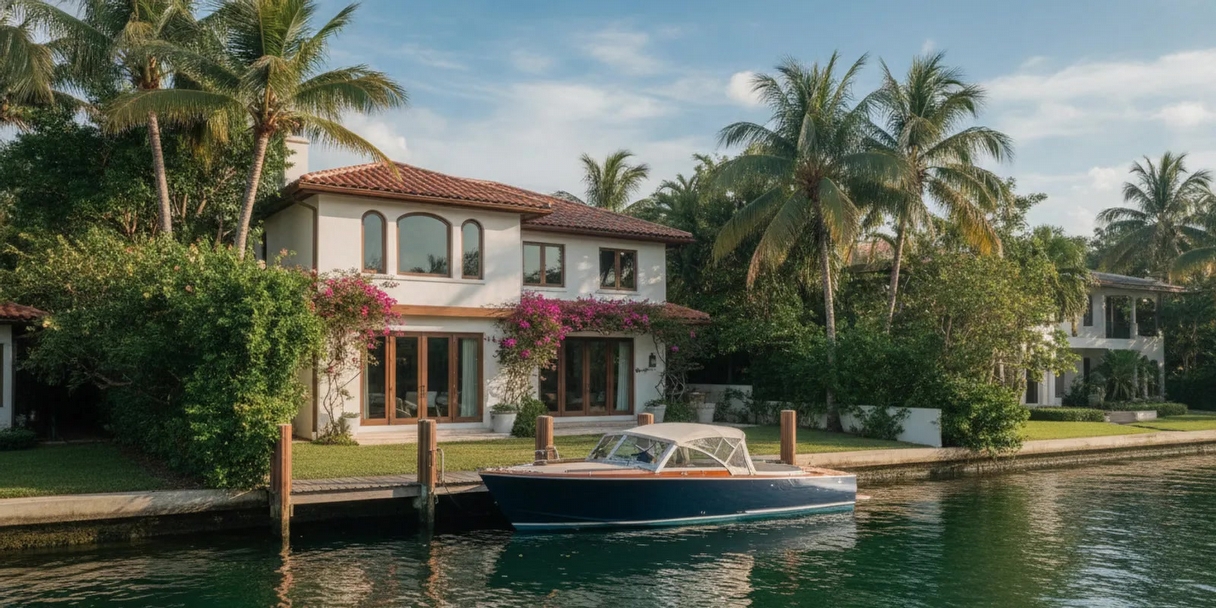
Waterfront homes in Miami can offer very different boating experiences, even when listings use similar language. In Coconut Grove, one property may have a dock, another may rely on a shared marina, and a third may offer a water view without any boating right. The useful distinction is not simply whether a home is waterfront, but what access a buyer can actually use, what conditions apply, and what it will take to maintain. Treat the description as a starting point, then confirm the details property by property.
Start with the boating experience you want
Before comparing listings, describe how you expect to use the water in an ordinary week. Do you want to board a boat at home, or would keeping it at a marina be practical? Is a nearby launch enough for occasional use? Or is the view and waterfront setting the priority, with no need for direct boating access? Your answer determines which property features matter and which claims need close verification.
Write down the vessel’s length, beam, draft, and height if you own one. If you are still shopping for a boat, choose a realistic size range rather than assuming any dock or slip will accommodate a future purchase. Note how often you expect to use it, whether you need storage, and whether guests will use the facility. These details turn a general preference into specific questions for a seller, marina, association, or inspector.
- At-home boating: You want a boat at or beside the property. Verify the right to use the dock and confirm its physical fit.
- Marina-based boating: You are willing to travel to the boat. Verify that a suitable slip is actually available and determine its terms.
- Occasional launch access: You need a workable way to reach a launch facility, not necessarily a dedicated slip.
- Water view: The outlook and setting matter most. Treat access as a separate question, not an implied benefit.
Keep the priorities in three columns: essential, preferred, and optional. An owner who expects frequent boat use might list an at-home dock as essential, while a buyer who values the view most may consider a nearby marina sufficient. This simple distinction helps prevent an attractive feature from distracting from a practical mismatch.
How do waterfront property types differ?
“Waterfront” describes a location, not necessarily a legal right or usable boating arrangement. A dock on the parcel, an assigned condominium slip, a separately leased marina space, public launch access, and a view are different things. Use the table as an initial screen; property records and current written terms determine what a particular home provides. For a broader Miami comparison, see our waterfront buyer guide for South of Fifth; the specific access arrangement still needs to be checked for each Coconut Grove property.
| Arrangement | May suit | Verify before relying on it |
|---|---|---|
| Private dock | An owner who wants to board or keep a suitable boat at home | Ownership or use rights, approvals, condition, dimensions, depth, and route limits |
| Shared or assigned slip | A buyer comfortable with community or facility rules | Transferability, availability, vessel limits, fees, approval, and any waitlist |
| Nearby marina or launch | A boater willing to travel to the vessel or launch point | Current access, operating terms, availability, logistics, and travel time |
| Water-view home | A buyer prioritizing outlook and setting | Whether any dock, slip, launch, or water-use right is included |
What does water access include in practice?
Ask the seller or listing representative to describe the access claim precisely. Is the dock on the parcel? Is the slip deeded, leased, assigned, or simply nearby? If an association or facility controls it, which declaration, rules, or separate agreement governs use? Request the current written documents and confirm that their terms apply to a buyer after closing. A verbal assurance that a slip “comes with” a residence should be checked against the actual records and transaction documents.
For a condominium or shared community, determine whether access is attached to the unit, subject to approval, or administered through a waitlist. Ask whether the right transfers to a purchaser, what fees apply, and whether there are vessel, scheduling, guest, or operating restrictions. Get answers for the specific unit and slip rather than relying on a general statement about the building. If a particular slip is part of the sale, ask that the supporting paperwork identify it clearly. Our Miami waterfront property questions offer another framework for separating an amenity description from the rights that documents establish.
Physical usability is separate from legal access. Ask for the dock or slip dimensions and available water depth, then compare them with the vessel’s draft, beam, and clearance needs. Conditions can change with location, tide, weather, and maintenance. A showing or listing photograph cannot establish year-round suitability. For a specific boat, ask an appropriate marine professional to assess fit and any operational constraints.
Trace the route to open water as well. A trip may involve channels, bridges, or other limitations. Verify clearances and operating conditions for the intended vessel instead of inferring unrestricted passage from a view of the water. NOAA provides general official coastal and marine information at NOAA.gov; confirm site-specific details with the relevant authorities and qualified professionals.
Review permits, rights, and maintenance records
A dock or seawall is more than a visual feature. Ask for available permits and approvals, repair and inspection records, and documents describing rights attached to the property or facility. Ask whether work is planned, applications remain unresolved, or notices and repair recommendations have been disclosed. Which records and authorities apply depends on the parcel and structure, so use a qualified local professional to determine what should be checked.
Clarify who is responsible for each component. On a single-family parcel, the owner’s duties may differ from those in a condominium or shared community. Association documents can allocate access, maintenance, fees, and approval authority. Review applicable governing documents, budgets, meeting materials, and disclosed repair plans with suitable professional advice. Do not assume that proximity to a home gives its owner the right to modify a dock or seawall.
Separate what a record confirms from what it does not. A past approval can document that work was authorized at a particular time; it does not by itself establish the structure’s current condition. A slip assignment can identify a user without proving that it transfers with a sale. Record the open question, the document or inspection needed to resolve it, and who will obtain that information. The related waterfront buyer guide also distinguishes a view, an access arrangement, and a verified right—three details that should not be treated as interchangeable.
Plan flood, insurance, and inspections early
Include flood information and an insurance conversation early in due diligence, before transaction deadlines become urgent. Review available information for the specific property and ask a qualified insurance professional what documentation is needed to evaluate coverage. A map, preliminary estimate, or seller’s account is not a coverage decision, a promise about future conditions, or a binding premium quote. Ask how the exact location, construction, and improvements enter the evaluation.
Choose inspections that match the property’s features. A general home inspection may not fully assess a dock, seawall, pilings, or submerged conditions. Ask an appropriate inspector or marine contractor to define the inspection scope and whether further testing is warranted. The goal is not to presume a defect; it is to understand present condition, likely maintenance needs, and what the review cannot establish.
Keep the residence and waterfront findings in separate notes. A well-kept interior does not demonstrate that a dock is sound, and a sound dock does not answer questions about the home. Schedule document review and specialist assessments early enough to consider the findings during the purchase process. If a report recommends another evaluation, establish who will arrange it and when, rather than treating the recommendation as resolved.
Compare the full cost of ownership
Purchase price is only one part of the comparison. Depending on the arrangement, boating can involve association charges, slip fees, maintenance, repairs, insurance, equipment, or travel to a facility. A home without a private dock can still involve marina expenses; a private dock can carry maintenance responsibilities that may not be apparent during a showing. Ask for records and current written estimates where available, and distinguish a quote from an informal estimate.
Use the same categories for each property. Label each item confirmed, estimated, or unknown; do not enter zero simply because an amount has not been established. This avoids a misleading comparison in which a property appears less expensive only because its open questions have not yet been answered.
| Cost or planning item | Private dock | Marina or shared access | No dedicated access |
|---|---|---|---|
| Recurring expenses | Confirm maintenance duties and records | Obtain current fees and facility terms | Check launch or facility charges if relevant |
| Repair exposure | Seek condition review and estimates | Review facility responsibilities and assessments | No private dock, but account for chosen facility |
| Availability and fit | Confirm rights, dimensions, depth, and route | Confirm an actual suitable and transferable slip | Check practical access and travel logistics |
| Evidence to request | Records, approvals, inspections, and estimates | Written assignment, current rules, fees, and terms | Facility details and current launch information |
A useful comparison sheet can include three columns for each item: amount or status, source, and next action. For example, write “annual slip fee—written terms requested—confirm transfer and current amount” rather than guessing a number. That makes uncertainty visible and gives each follow-up a clear owner. You can use the same categories when reviewing the South of Fifth waterfront comparison, while keeping the actual costs specific to each home and arrangement.
Build a focused Coconut Grove shortlist
For each candidate, create a one-page comparison that separates location, property type, view, and boating arrangement. Add the exact access claim, the document that could verify it, who will request that document, and when an answer is expected. This turns a broad search into manageable questions instead of relying on impressions from showings.
- Define your boating needs and record vessel specifications or a realistic size range.
- Classify each property as private dock, shared or assigned slip, nearby facility, or view only.
- Request the records that establish rights, approvals, rules, fees, and maintenance responsibility.
- Arrange property-specific reviews for the home and waterfront structures.
- Compare confirmed costs, estimates, and unresolved questions before deciding.
Consider a hypothetical comparison: one home has a dock but incomplete maintenance records; another has no dock but a written marina option whose transfer terms have not been confirmed. Neither should automatically win because of the word “access.” The first calls for records and condition review. The second calls for confirmation of availability, transfer, cost, vessel fit, and practical travel. Once those questions are answered, compare the remaining trade-offs against how you expect to use the home.
When discussing options with an agent, bring your shortlist and label each feature essential, preferred, or optional. That helps focus tours and follow-up, and it clarifies when a property may suit your lifestyle even if it does not provide the boating arrangement available elsewhere. The Miami waterfront guide for South of Fifth provides a separate neighborhood comparison, not a substitute for checking a Coconut Grove property’s documents.
Prepare an offer around verified information
Before making an offer, identify the documents and questions that could change your decision: access agreements or title information, association rules, available permits and repair records, specialist inspection needs, and written facility terms. Appropriate contractual protections and review periods depend on the transaction. Discuss them with qualified real estate and legal professionals instead of assuming that a marketing description will resolve an issue later.
Use a simple status sheet: confirmed, awaiting documents, specialist review needed, or not applicable. For each open item, note the practical consequence. If slip transfer is unresolved, decide whether the home remains attractive without it. If dock condition is uncertain, establish what inspection or estimate is needed. This frames uncertainty as a decision to manage, not a reason to guess.
Make the comparison specific to the property. A right may be personal to a current owner, an association may control use, or a facility may change its terms. The written documents and professionals reviewing them can clarify what applies; a general statement about another home or community cannot substitute for that review.
Frequently asked questions
Does a waterfront home automatically include a dock?
No. Waterfront describes a setting, not necessarily a dock, slip, launch, or right to use one. Confirm what is included in the sale and review the documents that govern the specific property.
Can I assume a marina slip transfers with the home?
No. A slip may be separately owned, assigned, leased, or subject to approval and availability. Request the written terms and confirm the transfer process for the specific residence and slip.
What should I check before buying a home with a dock?
Verify access rights, approvals, condition, dimensions, water depth, route constraints, maintenance responsibility, and applicable rules. Use qualified professionals for technical questions and review relevant records before relying on the dock.
Is a water view the same as boating access?
No. A view can be an appealing feature without providing a dock, slip, launch, or other right to reach the water. Confirm access independently and decide whether a nearby facility meets your needs.
A practical next step
Before choosing among waterfront homes in Miami, write down the boating access you need and verify each property’s rights, physical conditions, records, inspections, and likely costs. Compare documented features rather than listing labels so your decision reflects how you plan to use the home.
Ready to Explore Luxury Real Estate in Miami?
Don't miss opportunities in one of Florida's most desirable markets. Contact Maya Vander today for exclusive access and personalized service.


