
Waterfront Homes Miami Buyer Questions and Local Guidance in South of Fifth
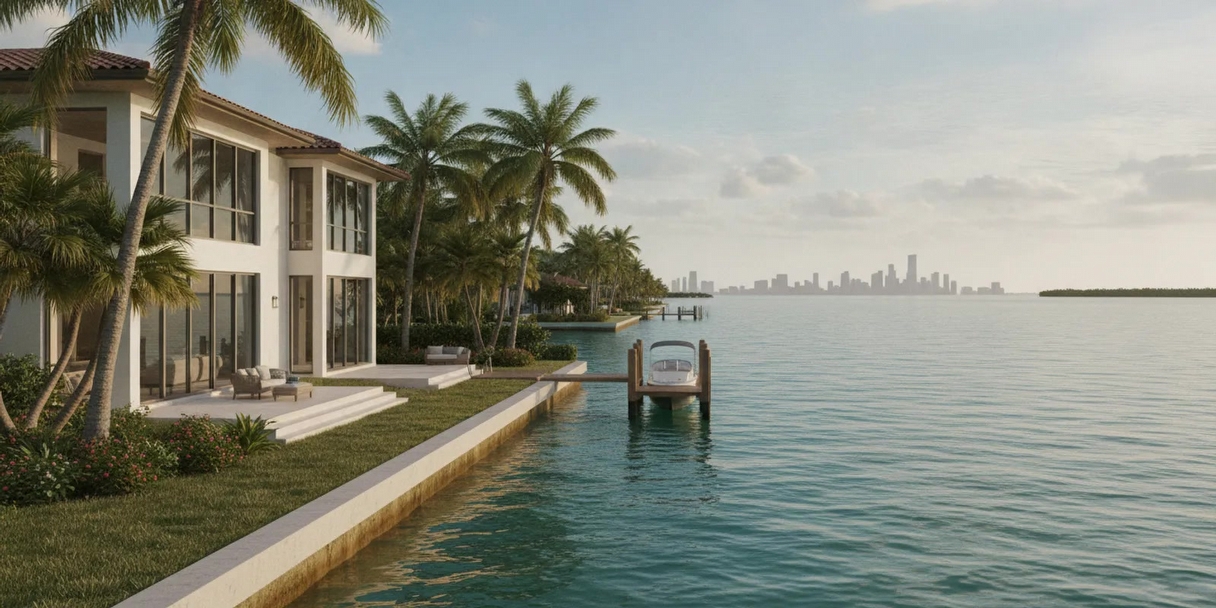
South of Fifth is one Miami-area setting buyers may consider when comparing waterfront homes, but “waterfront” can describe very different experiences. A bayfront condominium, a canal-side house, and a home near a marina do not offer the same access, privacy, costs, or maintenance. Start by defining how you want to use the water, then verify exactly what each property includes before you make a decision.
Discuss your Miami waterfront home search
Start with the waterfront experience you want
Before touring, write down what waterfront living means for your routine. Do you want an open-water view from the living room, a private dock for a boat, a place to paddle, or simply a coastal neighborhood close to the beach? Each preference points toward a different property type. Listing language alone does not establish whether shoreline access is private, shared, nearby, or included in ownership.
Rank your three most important features. A buyer who values a view and shared building amenities may prefer a condominium. Someone who keeps a boat may focus on dock dimensions, water depth, and the route to open water. A household that wants a private yard may look at detached homes, while accounting for the additional exterior upkeep they may involve. If you are also considering South of Fifth, compare a specific property’s access and building or lot features rather than assuming the neighborhood label guarantees a particular waterfront experience. Review this South of Fifth buyer guide as a related neighborhood reference.
- View: Which rooms face the water, and what could change the view or privacy?
- Access: Is there direct, shared, assigned, public, or only nearby access?
- Use: Will you swim, paddle, fish, keep a boat, or mainly enjoy the scenery?
- Ownership: Do you prefer shared building responsibilities or more direct control and maintenance?
How do Miami waterfront property types differ?
Bayfront and intracoastal condominiums may pair water views with shared building facilities. Canal-front houses may have outdoor space and a dock, but the dock’s condition and the navigable route need careful review. Oceanfront and beach-area homes offer a coastal setting, though actual beach rights and access arrangements vary. A home near a marina may work for a boat owner if a suitable slip is available on acceptable terms. These categories are starting points, not guarantees of any feature.
Two homes in the same area can differ in orientation, privacy, building rules, noise, water access, and maintenance obligations. When comparing South of Fifth with other Miami waterfront locations, write down the features of each address rather than treating “waterfront” or a neighborhood name as a complete description. The South of Fifth neighborhood overview can sit alongside your property-specific notes, but it cannot replace reviewing a listing’s documents and physical features.
Compare the trade-offs in one table
Use the same questions for each home and label every answer as confirmed, estimated, or still unknown. This keeps the comparison grounded in verifiable details rather than the strongest first impression.
| Property setting | May suit a buyer who values | Questions to resolve | Ownership items to compare |
|---|---|---|---|
| Bayfront or intracoastal condominium | Views, shared facilities, and less direct exterior upkeep | Are water facilities shared, assigned, restricted, or separate? | Association budget, reserves, insurance, rules, and planned work |
| Canal-front house | Private outdoor space and possible boating access | What are the dock condition, water depth, and route limitations? | Dock and seawall maintenance, permits, inspections, and insurance |
| Oceanfront or beach-area residence | A coastal setting and beach-oriented routine | Is access direct, shared, public, or simply nearby? | Building or lot condition, exposure, coverage, and access terms |
| Home near a marina | Boating without a private dock at home | Is a suitable slip available, and what terms apply? | Slip terms, travel time, availability, and separate costs |
What does water access include in practice?
Ask the seller or association to describe the exact access being represented. A water view does not necessarily include a dock, a deeded slip, or permission to reach the shoreline. A nearby marina is not the same as a guaranteed slip. If boating is important, confirm the arrangement in writing and review the relevant property or association documents before relying on it.
At a house, identify the dock, seawall, shoreline, and any neighboring or shared structures. Ask who owns each feature and who maintains it. Request available permits and repair records, and ask whether proposed work requires approvals. For a condominium, review the governing documents and rules, along with written information about any assigned slips or shared facilities. A qualified marine professional can assess whether a particular boat fits the dock and whether depth, clearances, and the route suit its intended use. For a separate look at the neighborhood itself, see the South of Fifth area guide.
Ask how access could be affected by maintenance, weather, or association decisions. Clarify restrictions on hours, guests, launching, storage, and watercraft. These questions are practical checks, not an assumption that every property has a problem. The goal is to establish whether the access you value is permitted, available, and workable for your routine.
Review flood information and insurance early
Flood exposure and insurance deserve attention early in a waterfront search. FEMA’s official website is a starting point for federal flood-related information, but a map is not a property inspection, a coverage decision, or a complete estimate of future cost. Ask an insurance professional to assess the specific home or building and explain which information is needed for a useful estimate.
Request available information about prior water intrusion, drainage, mitigation work, roof and building condition, and claims history. Compare coverage terms rather than looking only at a premium. Availability, deductibles, exclusions, and underwriting requirements depend on the property and insurer, so do not assume a nearby owner’s experience applies to your prospective home. A South of Fifth buyer overview may help with neighborhood context; evaluate flood and insurance questions separately for every address.
For a condominium, clarify what the association’s master policy covers and what remains the unit owner’s responsibility. Ask for current insurance information and have your insurance professional explain the implications for the unit. For a detached home, include the residence and relevant waterfront structures in your discussion. Record the assumptions and date behind each estimate so you can compare homes consistently.
What should condominium buyers review?
A waterfront condominium purchase involves both a private unit and a shared building. Request the current declaration, bylaws, rules, budget, financial statements, reserve information, meeting minutes, insurance details, and notices about repairs or assessments. Ask whether inspections or building work are underway or planned. Seek qualified legal and technical advice when you need help interpreting the records.
Read the materials as a connected picture. The budget shows planned income and expenses. Reserve information helps explain how future repairs are being prepared for. Minutes can reveal ongoing discussions, decisions, or open questions. A low current association charge does not prove that the building has enough resources for future work. A project mentioned in minutes does not, by itself, establish its final scope or cost. Ask for current written information and distinguish approved work from proposals.
Florida condominium requirements are established by law and can change. For a particular association, review current Florida statutes and official state resources with qualified advisers; a general article or informal assurance is not legal advice. Keep the task concrete: identify what the building maintains, what the unit owner pays, and which financial or repair questions remain unanswered. If you are comparing properties in South of Fifth, use the neighborhood guide as supplementary context, not as a substitute for association records.
Compare the full cost of ownership
A realistic comparison includes recurring costs and less predictable expenses. Build a property-specific worksheet and separate confirmed amounts from estimates. Include taxes, insurance, utilities, association charges where applicable, routine maintenance, and planned improvements. For a waterfront house, ask about dock, seawall, drainage, and exterior upkeep. For a condominium, review budgets and meeting records for building work and potential assessments without assuming that current charges will remain unchanged.
Use the same assumptions for every option. For example, when comparing a condominium and a canal-front house, do not count the condo association charge as its whole cost while omitting insurance and exterior maintenance for the house. Request comparable estimates from qualified professionals when possible. If an amount is unknown, mark it as pending instead of turning an unverified estimate into a precise-looking total.
- Record the asking price, expected financing, and transaction costs you are evaluating.
- Request current tax information and confirm how to estimate taxes after a purchase.
- Ask an insurance professional for property-specific guidance and note remaining uncertainty.
- Add association charges, documented planned work, and known assessment information.
- List likely maintenance needs, including water-facing structures and building systems.
- Keep estimates, source documents, and dates together so changes are easy to track.
- Set aside a contingency for open questions rather than treating every estimate as fixed.
Plan inspections around the property’s features
Arrange a general home inspection and consider whether the home calls for additional specialists. A waterfront house may need focused evaluation of the dock, seawall, drainage, roof, and other relevant components. A condominium buyer may need to understand building-wide inspections and repair records as well as the unit’s condition. Ask what each inspection covers and confirm that the professional is qualified for the feature being assessed.
Compare findings with available permits, maintenance records, and seller disclosures. If an inspection identifies a concern, ask the relevant professional to explain its implications, possible next steps, and whether more review is appropriate. A visual visit is not a substitute for an inspection, and a past repair receipt does not establish that a feature has no ongoing needs.
Sort diligence questions by timing. Decide which must be answered before an offer, which can be addressed during a due-diligence period, and which depend on third-party estimates or association records. Your real estate and legal professionals can help you understand deadlines and requests. Write questions precisely: “confirm dock permit and condition” is more useful than “check waterfront.”
Compare a dock, a marina, and a water view
Imagine a buyer who wants weekend boating and a simple weekday routine. A canal-front house may appear to be the obvious choice, but the buyer still needs to confirm that the dock suits the boat, the route is usable, and the maintenance responsibilities are acceptable. A marina-adjacent condominium may require a separate slip arrangement and a trip between home and boat, while offering a different division of exterior upkeep. A bayfront condominium may provide a striking view without private boat access.
These are comparison prompts, not universal outcomes. Write down must-haves, then assess access, convenience, privacy, condition, costs, and unresolved questions for each property. A home can be a good match even if it misses a preference, when the trade-offs are clear and acceptable. An attractive setting can be a poor fit if essential access is uncertain or the likely workload conflicts with your plans. If South of Fifth is on your shortlist, consult this related local buyer guide while you keep the property-level checklist separate.
Build a focused Miami waterfront shortlist
Keep the shortlist small enough to compare carefully. For each address, record the type of water setting, exact access, ownership structure, condition, insurance guidance, estimated recurring costs, and open diligence items. Add observations from visits, such as privacy, outdoor usability, noise, sun exposure, and the way the home connects to the water. Note the time of day, because one visit may not show how the setting feels at other times.
Give each open item a status: confirmed in writing, awaiting a document, awaiting professional review, or unknown. That makes it easier to see whether a promising home has manageable next steps or a central unanswered question. If a listing says “private dock,” identify the document and physical inspection that support the description. If it says “beach access,” clarify the route and rights instead of leaving the phrase open to interpretation.
Compare homes against your ranked priorities rather than searching for a universally best option. One buyer may choose a water view and association-managed exterior; another may accept more maintenance in exchange for a private yard and boat access. The right comparison makes those trade-offs explicit. For a separate neighborhood perspective, read the South of Fifth guide alongside your own verified property notes.
Talk through your Miami property priorities
Frequently asked questions
Does a waterfront listing mean I can keep a boat at the property?
No. Confirm whether a dock or slip exists, who controls it, whether it is included, what restrictions apply, and whether its condition and water route fit your intended use.
Is a waterfront condominium easier to own than a house?
The responsibilities differ. A condominium involves association rules, shared decisions, fees, and building obligations. A house may offer more direct control but can leave exterior and shoreline maintenance with the owner.
Should I check flood information before touring?
Reviewing available flood information early can help frame questions, followed by property-specific insurance guidance and inspections. A map alone does not establish a home’s condition, coverage availability, or total ownership cost.
What records should I request for a waterfront condominium?
Request governing documents, budgets, financial and reserve information, meeting minutes, insurance details, inspection information, and notices of planned work or assessments. Ask qualified advisers to review records when you need legal or technical interpretation.
What is the best way to compare waterfront homes?
Use the same checklist for every property: exact access, property and building condition, insurance guidance, costs, maintenance responsibilities, and unanswered questions. Compare each home with your priorities rather than relying on the view or listing language alone.
A practical next step
Decide which parts of waterfront living matter most, then verify each property’s access, condition, insurance picture, and ownership costs using documents and qualified advice. A structured comparison can help you focus your Miami search and make a more informed decision before you offer.
Ready to Explore Luxury Real Estate in Miami?
Don't miss opportunities in one of Florida's most desirable markets. Contact Maya Vander today for exclusive access and personalized service.


