
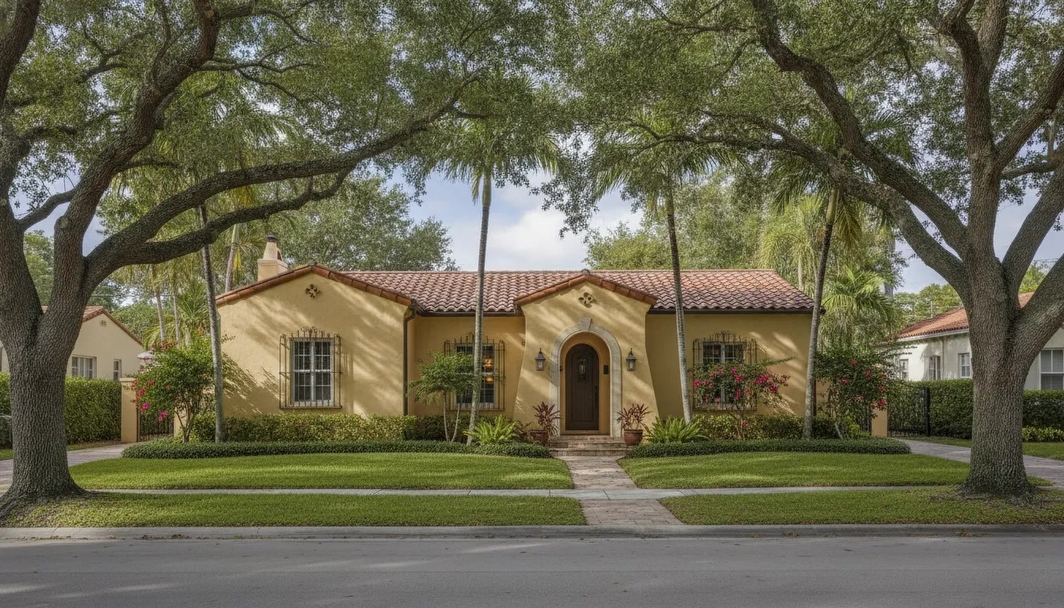
Homes for Sale Miami Shores FL Guide
A search for houses in Miami Shores looks, at first, like every other South Florida portal page. You see photos, a price, and a filter for a pool. The useful question is narrower. Miami Shores is its own village, a low strip of land beside Biscayne Bay. The house you want may share a ZIP code with homes that are not in the village at all.
For homes for sale miami shores fl, confirm the address is inside Miami Shores Village before you compare prices. Then price the lot: flood map, insurance, village and county taxes, and whether that property is on septic or sewer.
The village government says flooding can show up almost anywhere after a hard rain, even on a street that looks dry at a Sunday open house. That is the difference between browsing a list and deciding whether one house is a sound purchase. The checks below start with what the search is actually pointing at.
Talk with The Maya Vander Group about a Miami Shores house
Homes for Sale Miami Shores FL
This search is not simply a search for a Miami neighborhood. It refers to property within Miami Shores Village, a separate municipality in Miami-Dade County. The village was incorporated on January 2, 1932. It uses a council-manager government. Municipal information is published at msvfl.gov. Village Hall is at 10050 NE 2nd Avenue.
The distinction matters when you are comparing addresses, taxes, services, and property records. Miami Shores covers about 2.49 square miles of land and about 3.78 square miles in total, including water, at an elevation of approximately 7 feet. The Census Bureau counted 11,567 residents in 2020 and estimated the July 1, 2025 population at 11,669. Those figures describe the incorporated village, not every address that a real estate portal may group under the Miami Shores name. The village overview and geographic references provide additional background.
ZIP codes create another potential source of confusion. Addresses associated with Miami Shores may use 33138, 33150, 33153, 33161, or 33168, but a ZIP code is not the village boundary. A portal filter can therefore mix nearby properties into a search that appears to represent Miami Shores. Confirm the municipality and exact address before treating a result as a true match. The village budget materials identify Village Hall at the same NE 2nd Avenue address and provide current municipal context in the FY2026 proposed budget book.
For live inventory, start with the property search and verify each listing's location rather than relying only on a keyword or ZIP filter. If your goal is a countywide overview of the purchase process, use the Miami houses guide as the broader starting point. Miami Shores should then be evaluated as its own municipality, with property-level research layered onto the general steps for buying a Miami home.
Who a Miami Shores House Fits
Before you schedule showings for homes for sale Miami Shores FL, decide whether the village matches the way you want to live. Miami Shores is a small, house-oriented community on Biscayne Bay, not a high-rise condo district. Census estimates for 2020-2024 show 3,637 households, an 87.5 percent owner-occupied housing rate, and an average of 2.80 people per household. That profile points toward buyers who value a settled residential setting and the privacy and responsibility of a house.
The same Census QuickFacts data reports a median value of $864,400 for owner-occupied homes. Median monthly owner costs are $3,709 with a mortgage and $1,133 without one. Median gross rent is $2,657. These are multi-year estimates for context, not current asking prices or a live market index.
The data also says 90.3 percent of residents age one and older lived in the same house a year earlier, while 22 percent of residents are under 18. Together, those figures describe an established community. They cannot tell you whether a particular home, block, or budget is a fit. Review Census population tables for cities and towns before comparing current listings.
Who may feel at home here
Miami Shores may suit buyers who want a lower-density neighborhood and more space than a typical condo. Many owners stay for years. Families should verify the school boundary for every address rather than trusting a neighborhood label.
The Greater Miami Shores Chamber names Miami Shores Elementary, Horace Mann Middle, and Edison High. It also names Doctors Charter School beside Barry University, plus private options such as Miami Country Day and Cushman. Barry University sits inside the village. These are options to investigate, not a rating and not a placement guarantee. See the local schools and universities list.
When to look elsewhere
If your priority is a condo tower, walkable nightlife, or the quick vertical pace associated with Brickell, Miami Shores is likely the wrong search. Buyers comparing it with Grove or Pinecrest should treat those as different products, with different housing patterns and daily rhythms, rather than interchangeable neighborhoods. Start with the question that matters most: do you want a village house and its ongoing upkeep, or a more urban or alternative suburban format?
How Streets and Houses Differ Inside the Village
Miami Shores is small, but it is not one house repeated on every block. The original plan was laid out in the 1920s by the Shoreland Company after earlier bayfront and inland tracts. It called for thousands of building sites, miles of bay frontage, and inland waterways. What a buyer meets now is that plan plus a century of additions. You will see older single-family houses, later renovations, and fewer lots on a canal or the bay. The village history is useful background. It is not a description of the house you are about to tour.
Bay, canal, and interior lots are different purchases
A bayfront or canal lot and an interior lot can share a street name and still be different products. Water frontage brings a view and a maintenance duty. Seawall age, permits, and who pays for the next repair belong in the offer math. An interior lot may avoid that line item and still flood in a hard rain. The village is flat, and its canals and streets share one drainage system. Do not treat "not on the water" as "not a flood question."
Older houses are the normal stock, not the exception. Ask what was updated, what was permitted, and what was only refreshed. A new kitchen does not tell you the age of the roof, the electric service, the windows, or the plumbing. Those items decide insurance eligibility and the first years of ownership more often than the paint color does.
Sewer, septic, and the block you actually want
Service under the lot varies. The village's FY2026 budget letter says septic-to-sewer conversion in Shores Estates has begun, and that it is the first residential construction of that program. That sentence is a reason to ask, not a map. One block can be on sewer while a nearby estate lot is still on septic, with a future assessment that never appears in the listing remarks. Put the question to the seller, the survey, and the village before you assume the house in the photo matches the house next door.
Main-road houses and interior-street houses also live differently. Northeast 2nd Avenue is the civic spine, with Village Hall at 10050 NE 2nd Avenue. A house on a quieter residential street is the more common search. Visit at the hour you would actually come home, not only at a broker's open house, and notice traffic, school pickup, and how the street drains after rain.
Flood, Insurance, and the Lot Under the House
Flood diligence belongs at the property level, not just the neighborhood level. Miami Shores Village says flooding can occur at any time of year, with the greatest threat from heavy rain between June and October. Prolonged rain can exceed the capacity of drainage systems and canals, and conditions can worsen when the ground is saturated or groundwater is high. Because the village is flat, flooding can occur almost anywhere. Read the village's flood information and mitigation guidance before you evaluate homes for sale in Miami Shores, FL.
The village page also reports mitigation work. That includes water-control work on the C-8 canal near NE 105th Street and seawall replacement concepts. It includes pumping near NE 104th Street for rain, high tide, and king tides. It also includes Bayshore Drive pump-station work after saltwater damage from Hurricane Irma.
The Activity 510 status is dated around October 1, 2023. Treat these as village-reported projects, not as proof that every project was finished in 2026.
Start with the exact address in the FEMA Flood Map Service Center. Check the mapped flood zone, base flood elevation, and panel number, then ask for an elevation certificate if one exists. A map lookup is not a substitute for an insurance quote. Use FloodSmart for flood-insurance education and ask an insurance professional to price coverage for the specific home, including any exclusions and elevation-related requirements.
| Check | What to verify |
|---|---|
| Flood zone lookup | Address, zone, base flood elevation, and panel at FEMA. |
| Elevation certificate | Whether an existing certificate supports the home's elevation review. |
| Drainage and king tide | Past water issues, street drainage, and conditions during heavy rain or king tides. |
| Seawall if waterfront | Age, condition, permits, maintenance, and any planned work. |
| Septic versus sewer | Which system serves the lot, plus conversion status and assessments. |
| Insurance quote | Flood and property coverage for this address, with exclusions explained. |
Also ask whether the lot is on septic or sewer. The village's FY2026 budget letter says septic-to-sewer conversion in Shores Estates has begun. It is the first residential construction of that program. That does not mean every Miami Shores home is on septic. It does make the service connection, conversion status, and any assessment a real question for an older property. Review the FY2026 proposed budget letter and confirm the answer for the exact lot.
Taxes and Carrying Costs
The asking price is only the starting point for the cost of owning a Miami Shores house. Property taxes, insurance, utilities, maintenance, and property-specific charges can change the monthly picture. Build a carrying-cost estimate around the individual parcel. Do not stop at the listing headline.
Miami Shores Village's proposed FY2026 budget letter is dated September 3, 2025. It keeps the village operating millage at 7.8000 mills, the same rate as FY25. It also lists a 0.1331 debt-service millage tied to Doctors Charter School debt. That debt was financed at 2.5 percent and is scheduled to sunset in 2033.
The letter reports total taxable assessed value for village properties of $2,152,326,300, up 8.76 percent from the prior year. These figures describe the village layer only, not the complete tax bill. County, school board, and other authorities are separate lines on the Miami-Dade bill. Read the proposed FY2026 budget letter for the source figures.
For a particular home, check the address with the Miami-Dade Property Appraiser. The parcel record shows assessed value, exemptions, and trim history. Do not assume a prior owner's exemptions will transfer to you. Do not turn a millage rate into a total tax estimate without the parcel's taxable value and every taxing authority. Also ask whether any special assessment belongs in the budget.
Insurance is another house-specific variable. Wind, flood, and homeowners insurance should be quoted for the address and its construction, not estimated from a neighborhood average. The Census Bureau's 2020-2024 median owner cost with a mortgage is $3,709 a month. That is a multi-year community statistic, not a quote for the house you are considering.
High earners comparing Florida carrying costs with a relocation can read the Miami relocation guide for high earners. The next step is still the parcel. Verify the tax record. Get insurance quotes. Price the ongoing cost before you treat an asking price as the real cost.
How to Read a Miami Shores Search
A search for homes for sale in Miami Shores, FL currently returns listing portals. On October 28, 2026, the first page was Realtor.com, Zillow, Trulia, Elliman, and a local brokerage page, each with its own filter. One snippet said 88 homes. Another said 94. Those numbers are not a market. They are whatever that site included that morning: pools, price caps, for-sale-by-owner, or "cheap" cuts that pull in a wider map.
Use a portal to find an address. Then leave it. Confirm the parcel is inside the village, open the property appraiser record, and look up the flood map. If the filter is "with a pool" or "newest," you are looking at a slice, not at Miami Shores. Related searches that day were single-family homes, homes with a pool, Zillow's cut, and for-sale-by-owner. None of those is a substitute for the lot questions in this guide.
What to ignore in a listing card
- A home count in a headline. It changes when the filter changes.
- A ZIP code used as if it were the village line.
- A school name typed into remarks without a district check for that address.
- A "low flood risk" phrase that is not backed by the FEMA panel for the structure.
- A prior tax bill that still includes the current owner's exemptions.
When you want the live set The Maya Vander Group can actually discuss with you, start at property search and name the address. The communities hub is the wider map of neighborhoods the group already covers. Miami Shores does not have its own community page there yet, which is another reason not to borrow a Grove or Gables listing and call it the same search.
Buyers relocating from New York sometimes expect a neighborhood guide to double as a city-choice guide. It should not. If the open question is still whether Miami fits the move, read which Miami neighborhoods tend to fit New Yorkers first, then come back to the village checks. Pinecrest is a different inland product; the Pinecrest luxury guide covers that choice, not this one.
Questions Before You Offer
A polished listing photo does not answer the questions that change the cost or the fit of a Miami Shores house. Work through the address itself before you write an offer. Current inventory belongs on the property search, not in a guide. What belongs here is the decision sequence.
Start with the boundary. Confirm the parcel is inside Miami Shores Village, not merely a nearby ZIP that a portal grouped with the village. Then open the FEMA map for that structure, ask whether an elevation certificate exists, and get a flood and wind quote on this house. If the lot touches a canal or the bay, the seawall's age, condition, permits, and maintenance duty belong in the same file as the purchase price.
Taxes and services come next. The Miami-Dade property appraiser record shows assessed value, exemptions, and trim history for the parcel. Ask whether the lot is on septic or sewer and whether any conversion assessment applies. School placement is a district question for this address and this year, not a sentence in the listing remarks.
If you are really comparing daily life, not just a house style, read the decision differently. A Grove purchase and a Gables purchase answer different questions than a village house on the bay. The Coconut Grove buyer decision guide and the Coral Gables houses guide cover those places. For the wider market around any of them, use the Miami real estate market buyer's guide.
Choose representation that will verify these items with you, not after a contract is already emotional. The guide to choosing a Miami luxury real estate agent is about that standard. There is no shortcut count of off-market Miami Shores houses that replaces the checks below.
- Is this address inside Miami Shores Village limits, or only a nearby ZIP?
- What do the FEMA flood map, panel, and base flood elevation say for this structure?
- Is there an elevation certificate, and what will flood plus wind insurance cost on this house?
- If the lot touches a canal or the bay, what is the seawall condition and who maintains it?
- Is the lot on septic or sewer, and is any conversion assessment attached to it?
- What do the property appraiser records show for assessed value, exemptions, and trim history?
- Which school boundary applies this year, confirmed with the district?
Frequently Asked Questions
Is Miami Shores part of the City of Miami?
No. Miami Shores is Miami Shores Village, a separate municipality in Miami-Dade County. It was incorporated on January 2, 1932, and it has its own council-manager government. A listing labeled Miami can still sit outside the village, so confirm the municipality on the parcel, not the headline.
Why do homes for sale in Miami Shores FL show several ZIP codes?
The village is associated with ZIP codes 33138, 33150, 33153, 33161, and 33168. A ZIP code is a mail area, not the municipal line. Portal filters that use a ZIP can mix in nearby addresses. Match the parcel to the village before you compare it with a true Miami Shores house.
Does the whole village sit in one flood zone?
No map letter applies to every lot. The village says flooding can occur almost anywhere because the land is flat, with the greatest threat from heavy rain between June and October. Look up the exact address on the FEMA Flood Map Service Center for the zone, base flood elevation, and panel, then price insurance for that structure.
Which schools serve Miami Shores?
The Greater Miami Shores Chamber says Miami-Dade public schools serve the village. It names Miami Shores Elementary, Horace Mann Middle, and Edison High. It also names Doctors Charter School beside Barry University. Private options and Barry University are part of the local picture too. Boundaries change, so confirm the address with the district. A chamber list is not a rating or a placement guarantee.
What taxes should a buyer budget beyond the asking price?
The proposed FY2026 budget keeps the operating millage at 7.8000 mills. It lists a 0.1331 debt-service millage tied to Doctors Charter School debt through 2033. That is only the village layer. County, school, and other authorities are separate lines. Use the property appraiser record for the parcel, and get house-specific wind and flood quotes. Do not treat a prior owner's exemptions as yours.
Review a Miami Shores Address Before You Offer
If a house in the village is far enough along to matter, review that address before you offer. Check village limits, the flood map, insurance, the tax record, and whether the lot is on septic or sewer. The Maya Vander Group can walk through those questions with you before a contract locks them in.
Contact The Maya Vander Group to review a Miami Shores address before you offer.
Ready to Explore Luxury Real Estate in Miami?
Don't miss opportunities in one of Florida's most desirable markets. Contact Maya Vander today for exclusive access and personalized service.
© 2026 THE MAYA VANDER GROUP. All Rights Reserved. Trademarks and brands are the property of their respective owners.


