




















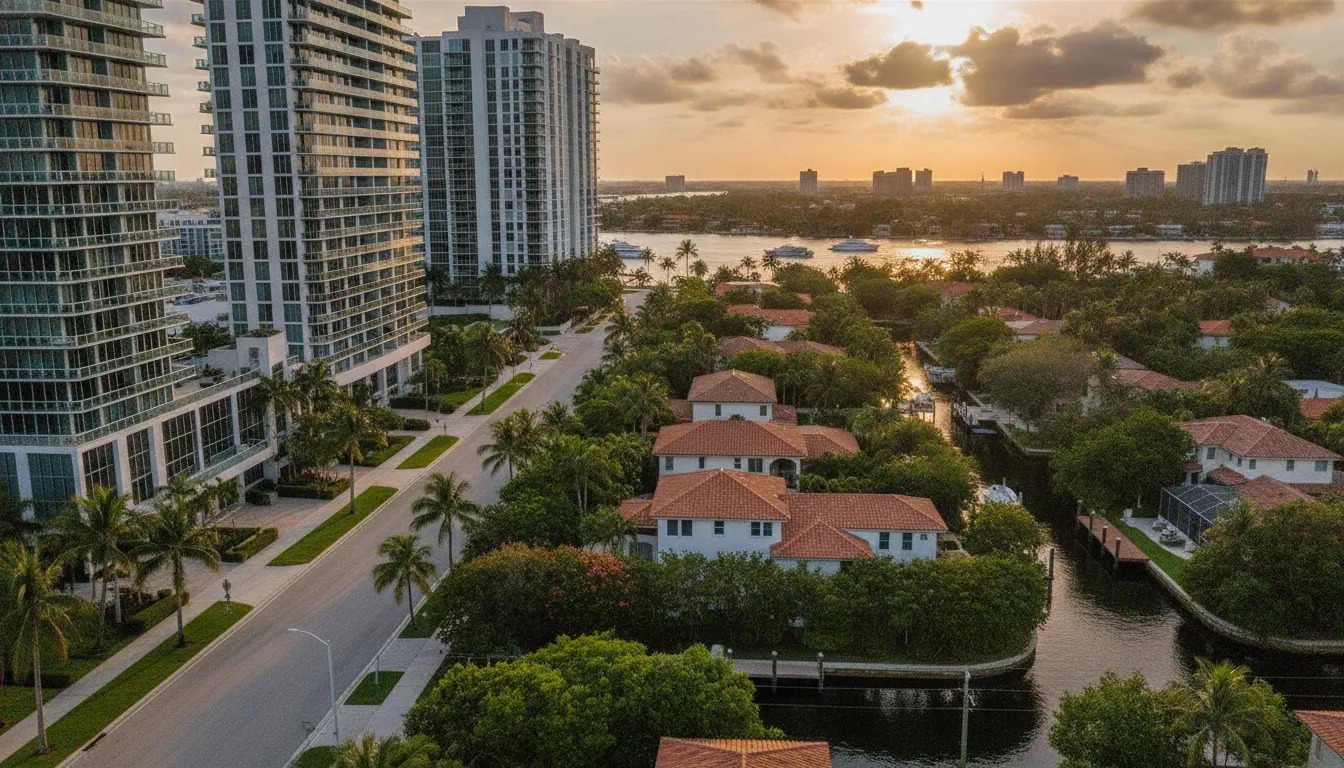
Miami Real Estate Market: A Buyer's Guide
Buying in Miami starts with a more useful question than whether prices are rising or falling: what exactly are you comparing? A waterfront condo in Miami Beach, a family home in Coral Gables, and an investment property in Brickell can respond to different forces, even when they appear in the same market report.
The miami real estate market is best understood as a group of Miami-Dade submarkets divided by location, property type, price range, and transaction stage. Buyers can make better decisions by reading those distinctions alongside financing, insurance, building condition, association records, and their own intended use.
Schedule a consultation with The Maya Vander Group to discuss your Miami buying plan with a local adviser before you act.
That framework turns broad headlines into practical questions: which geography fits your priorities, which property type matches your objectives, and which indicators deserve closer review? Start by defining the boundaries of the market you are actually considering.
What Does the Miami Real Estate Market Actually Include?
The phrase "Miami real estate market" sounds like one place, but it is better understood as a framework for comparing several kinds of property decisions. At the broadest level, the Miami housing market area used in HUD analysis is coterminous with Miami-Dade County. For a buyer, however, that countywide label is only the starting point. The relevant market becomes more specific when you identify where you want to live, what you want to buy, how much you plan to spend, and where you are in the transaction.
Geography: which Miami locations are you comparing?
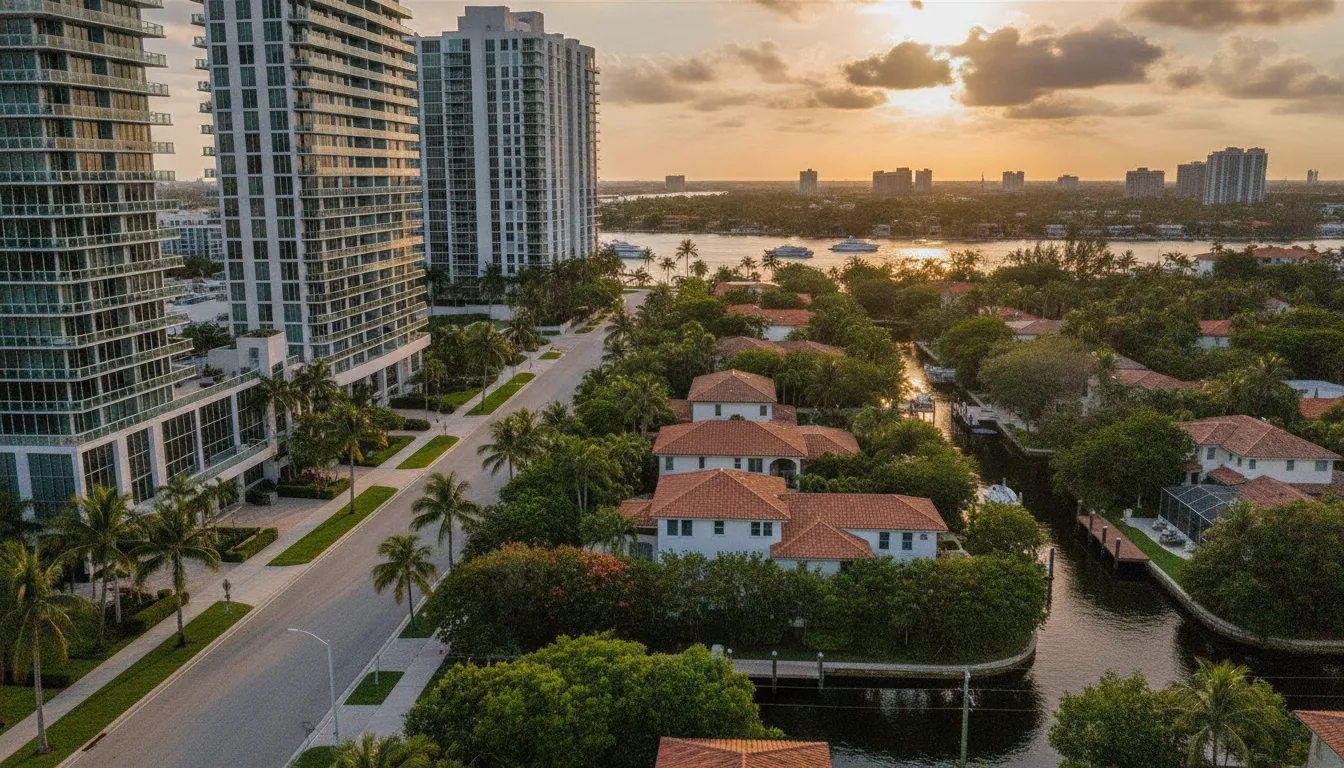
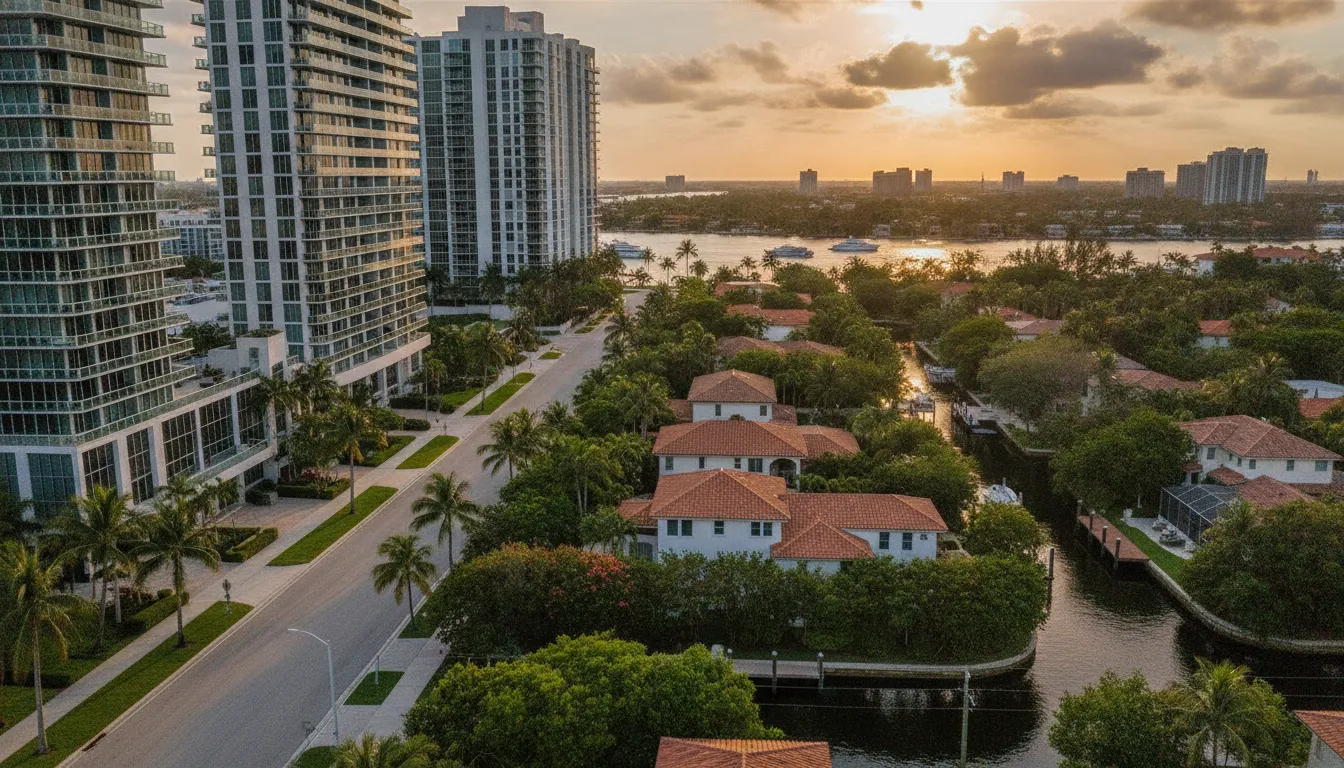
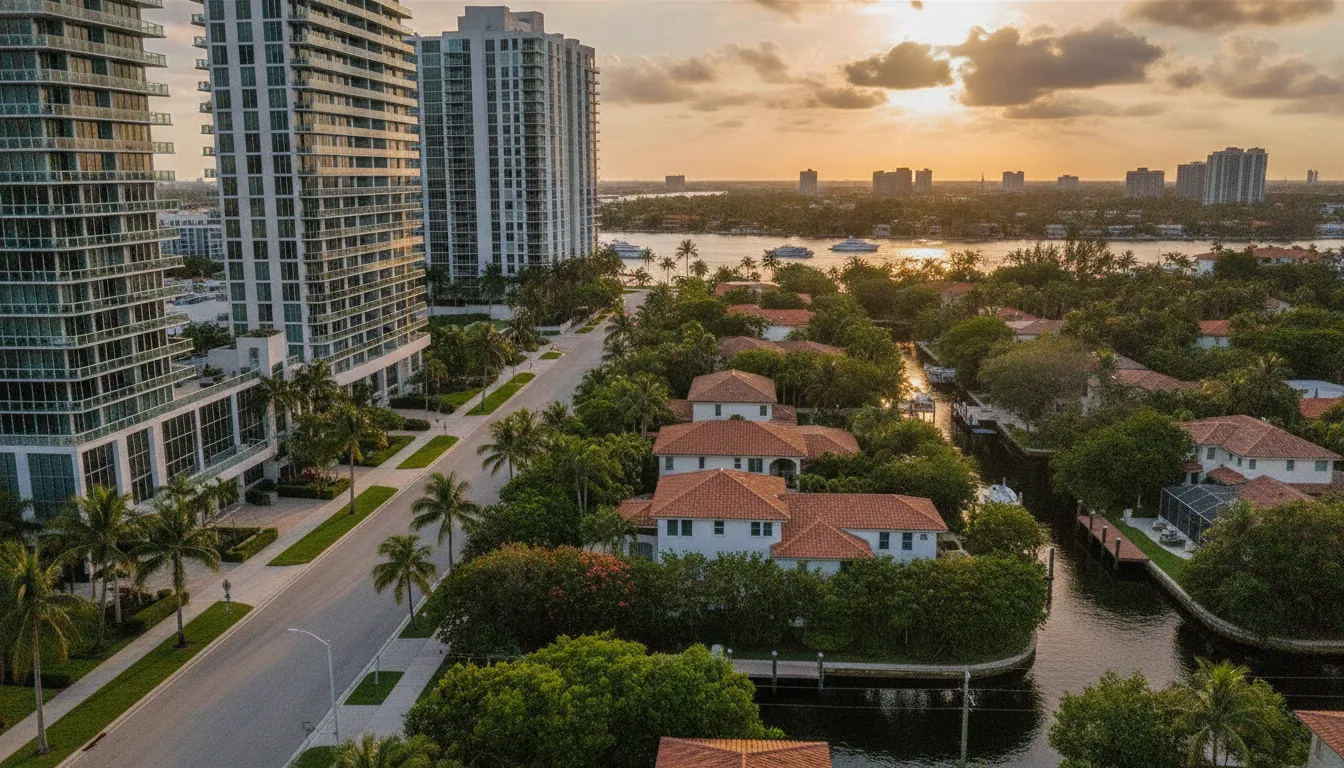
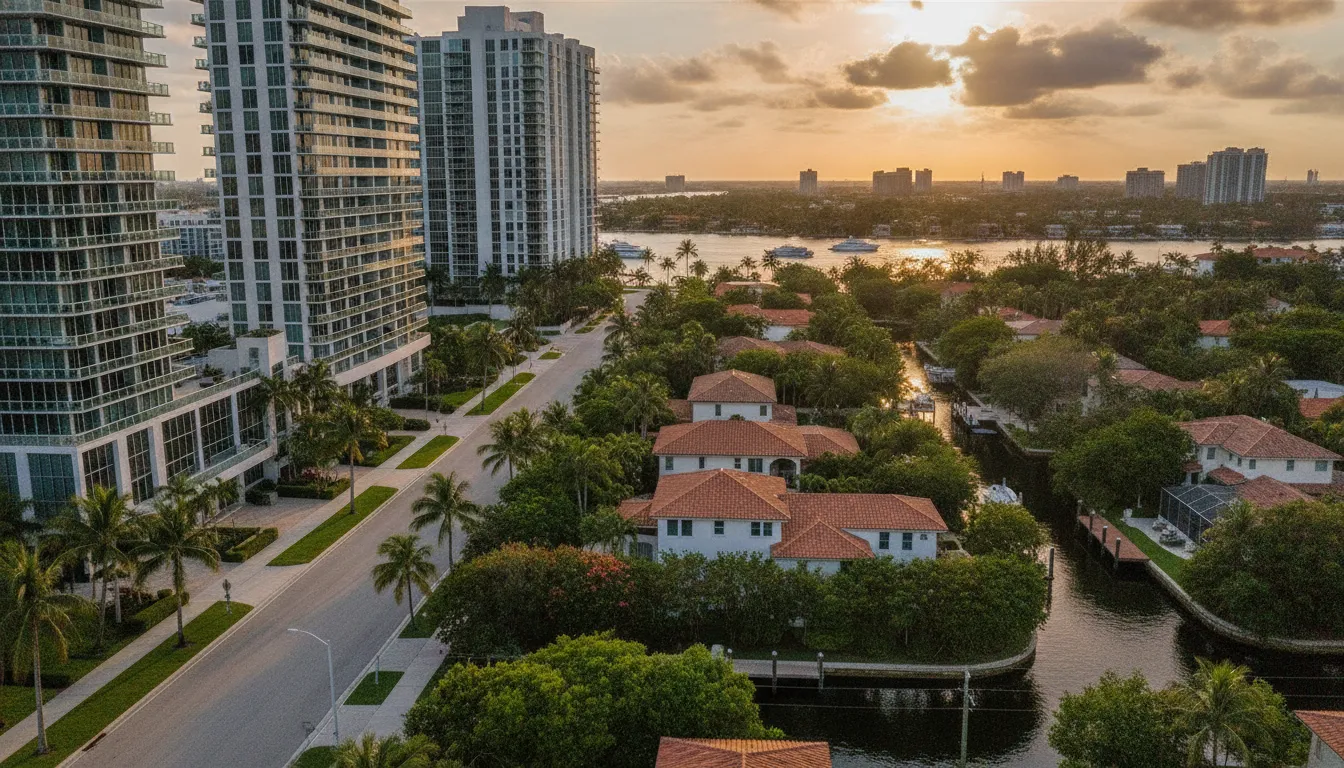
Location is the first boundary. The Maya Vander Group's primary service territory includes Coconut Grove, Coral Gables, Brickell, Miami Beach, Aventura, and Key Biscayne. These communities can represent very different daily experiences, even when they are discussed under the same countywide market name. A buyer comparing a walkable Brickell condo with a single-family home in Coral Gables is not making a simple price comparison. Commute patterns, privacy, outdoor space, waterfront exposure, building lifestyle, and proximity to preferred amenities all affect the decision.
If you are still narrowing the area, review these Miami neighborhood options for buyers before treating a search result as a complete picture of Miami.
Property type and price band: what exactly is being measured?
A useful market definition names the property type. Single-family homes, condominiums, townhomes, and investment-oriented properties have different ownership structures and decision criteria. A condo purchase may require careful review of association documents, reserve funding, structural integrity requirements, building financing eligibility, and rental restrictions. A single-family purchase may place more emphasis on the lot, construction, maintenance, and freedom to modify the property. The word "market" becomes more useful when you compare like with like.
Price band is the second filter. Rather than asking whether Miami is expensive or affordable in the abstract, define the range that fits your financing, cash position, ownership costs, and intended use. A buyer seeking a primary residence has a different practical market from an investor evaluating an income-producing property. Two homes in the same neighborhood may belong to different decision sets because their price, condition, property type, or financial purpose differs.
Transaction stage: where are you in the process?
The market also changes meaning based on transaction stage. Early research involves defining location and property type. Active search involves comparing available homes and building-specific details. Offer preparation requires valuation, terms, timing, and due diligence. Contract-to-close work focuses on inspections, financing, documents, and risk management. Each stage calls for different information, so a broad market headline cannot answer every buyer's question.
This is why an evergreen market guide should not be confused with a current market-update article. A market update reports time-sensitive conditions. A definition-led guide helps you decide which geography, property type, price band, and transaction question applies to your situation before you act.
How to Read the Miami Real Estate Market Before You Buy
A useful market reading is more than asking whether prices are rising or falling. Before you act, look at several indicators together and relate them to the property type, price range, and submarket you are considering. The Florida International University Beracha Housing Health Index methodology provides a helpful framework because it evaluates Miami-Dade using multiple measures rather than one headline statistic.
Start with inventory and days on market
Inventory describes the supply of homes available to buyers at a particular point in time. More available properties can give you greater selection and more room to compare condition, location, and value. Lower inventory may mean that well-positioned homes receive more attention, although the effect can vary significantly between neighborhoods and property types.
Days on market adds a timing dimension. If comparable homes are selling quickly, you may need to be prepared to make decisions promptly. If they are taking longer, you may have more time to investigate the property and negotiate. Do not treat a single listing's time on market as decisive. Compare similar homes and ask whether the listing was withdrawn, relisted, repriced, or materially changed.
Use the sale-to-asking ratio as negotiation context
The sale-to-asking-price ratio compares the final sale price with the original or most recent asking price, depending on the data source. A ratio closer to the asking price can indicate that sellers are achieving stronger pricing. A lower ratio may suggest a wider negotiation gap, but it does not automatically mean that every seller will accept a substantial discount.
Use this measure alongside the property's condition, improvements, exposure, and comparable closed sales. A home that was accurately priced from the beginning can produce a different ratio from one that entered the market above its likely value. Buyers should also distinguish between the original asking price and a later price after a reduction.
Watch inventory change, price momentum, and pending sales
Inventory change shows whether supply is expanding or contracting. That direction can matter as much as the current inventory level. Price momentum adds another layer by showing how the pace of price appreciation has been moving. Momentum is not a promise of future appreciation. It is a dated signal that should be tested against financing costs, insurance, property condition, and the specific neighborhood.
Finally, compare sold and pending properties with current inventory. A relatively high number of sold or pending homes compared with available supply can point to stronger absorption. A lower relationship can indicate that buyers have more selection or that homes are taking longer to move. Pending sales are not completed transactions, so treat them as an indication of current activity rather than confirmed results.
All of these measures are time-sensitive. Label the date and geographic area for every market snapshot, and avoid applying a countywide conclusion to one building or neighborhood. When you begin reviewing Miami homes available to buyers, compare the indicators with the specific property category and your own purchase objective. That approach turns market data into decision context instead of a prediction.
Why Miami Neighborhoods Can Tell Different Market Stories
A Miami buyer is not choosing from one uniform market. The relevant evidence changes with the neighborhood, property type, price range, and intended use. Miami-Dade communities including Coconut Grove, Coral Gables, Brickell, Miami Beach, Aventura, and Key Biscayne each bring a different combination of access, housing stock, lifestyle, and ownership considerations. That service-area context matters when interpreting any headline about the miami real estate market. A countywide figure can be directionally useful, but it may not describe the property a buyer is actually considering.
A mainland neighborhood and a beach market can respond differently to the same broader conditions. The Maya Vander Group's market commentary describes different momentum between areas such as Coconut Grove and Coral Gables and beach markets, where listings may take longer to sell. This is a dated observation rather than a permanent forecast, but it illustrates the central point: market conclusions need a neighborhood and time frame attached to them. Buyers should ask whether a statistic reflects their submarket before using it to set expectations about value, competition, or timing.
Buyer fit changes the meaning of location
Access and daily routine often matter as much as a list price. A buyer who wants walkability, restaurants, and a shorter urban commute may find Brickell compelling. A household seeking more space, a quieter setting, or a different school and neighborhood rhythm may evaluate Coral Gables or Coconut Grove differently. Miami Beach and Key Biscayne introduce a distinct coastal lifestyle, while Aventura may appeal to buyers who prioritize its particular mix of residential convenience, amenities, and regional access. These are not interchangeable lifestyle choices. A Brickell neighborhood buyer guide can help with that specific urban context, while a broader Miami neighborhood options for buyers comparison is useful when the right fit is still open.
Property stock changes the risk profile
Neighborhood comparisons also need to distinguish condominiums, single-family homes, and townhomes. A condo buyer may need to examine association documents, reserve funding, structural integrity requirements, building financing eligibility, and rental restrictions. Insurance exposure and potential assessments can vary materially between buildings and coastal locations, even when two properties appear similar online. A single-family buyer may instead focus more heavily on lot characteristics, flood exposure, roof and systems condition, renovation scope, and the cost of maintaining the property.
For that reason, a headline about rising or softening prices should not automatically determine an offer strategy. Start with the buyer's objective, compare genuinely similar properties within the same submarket, and model the full ownership cost. The best neighborhood is the one whose access, lifestyle, property type, building or home condition, and long-term obligations fit the buyer's priorities, not simply the one attached to the strongest market headline.
Which Miami Property Type Fits Your Buying Objective?
The right property type depends less on a universal ranking and more on what you want the purchase to accomplish. A primary residence, a flexible second home, and an income-oriented asset can lead to very different searches, even when they share the same neighborhood. Start by deciding how much control, convenience, privacy, and operational responsibility you want to carry.
That distinction matters when reviewing the how to evaluate Miami condos. FIU's Beracha Housing Health Index evaluates single-family homes and condominiums separately across three price ranges, rather than treating every Miami property as one interchangeable market. This is a useful reminder to compare like with like when interpreting market information.
| Property type | Primary consideration | Questions to ask |
|---|---|---|
| Single-family home | Privacy, land, renovation control, and the full cost of maintaining the property. | Do the lot, layout, insurance, roof, systems, and projected upkeep fit the way I will use the home? |
| Condominium | Convenience balanced against association governance, building condition, and recurring charges. | What do the association documents, reserves, assessments, structural requirements, financing rules, and rental restrictions show? |
| Townhome | A middle ground between private living space and shared community responsibilities. | Which exterior elements are mine to maintain, what does the association cover, and how flexible are use and leasing rules? |
| Investment-oriented purchase | Whether the property supports the intended hold period, income plan, financing structure, and risk tolerance. | What are the realistic operating costs, permitted rental strategy, vacancy assumptions, and exit options? |
Single-family homes and townhomes
A single-family home may suit a buyer who values privacy, outdoor space, and authority over improvements. It also places more responsibility on the owner for the structure, systems, landscaping, insurance, and maintenance plan. A townhome can offer a more manageable footprint while preserving a residential feel, but the community's rules and cost-sharing structure deserve the same attention as the home itself. Review the governing documents before allowing lifestyle expectations to determine the purchase.
Condos and investment-oriented purchases
A condo can simplify certain aspects of ownership, but convenience does not eliminate diligence. Before committing, examine association documents, reserve funding, structural integrity requirements, building financing eligibility, and rental restrictions, as outlined in the group's Miami condo investment considerations. For an investment-oriented purchase, separate personal preference from the operating plan. A beautiful unit is not automatically a suitable rental asset, and projected income should be tested against dues, insurance, taxes, repairs, management, financing, and periods without a tenant.
The strongest comparison is the one that matches your objective, not simply the property with the most appealing features. Define your intended use, acceptable obligations, and time horizon first. Then compare properties within the same category and price context before deciding which opportunity deserves deeper review.
What Should You Verify Before Making an Offer?
A compelling property is only the starting point. Before you write an offer, verify that the price, financing, building condition, and ongoing obligations fit your actual objectives. The right diligence can also reveal whether a seemingly attractive property carries costs or restrictions that change the decision.
Test the value from more than one angle
Start with recent comparable sales that match the property's location, type, size, condition, view, and amenities. Adjustments matter: Miami-Dade's Property Appraiser explains that comparable properties are adjusted for differences such as size and extra features. The county also describes a cost approach, which considers replacement cost and depreciation, and an income approach for income-producing properties that weighs expenses, taxes, insurance, maintenance, risk, and return. These approaches are reference points, not substitutes for a current, property-specific analysis.
Also distinguish market value from taxable value. Miami-Dade calculates market value as of January 1 each year. That date may not reflect today's offer environment, and a prior owner's exemptions or assessed value should not be treated as your future tax bill. Review the county's official property value guidance and confirm the current record for the specific address.
Calculate the complete ownership cost
Ask your lender to confirm financing assumptions, including down payment, reserves, rate, loan eligibility, and appraisal requirements. Obtain an insurance review before the inspection and understand which coverage belongs to you versus the association. For a condo, review the declaration, bylaws, budgets, meeting minutes, financial statements, reserve funding, pending assessments, insurance, and any structural integrity requirements. Confirm that the building and unit are eligible for the intended financing.
Rental rules deserve the same attention. Verify minimum lease terms, limits on rentals, approval procedures, pet rules, renovation restrictions, and any restrictions that affect your exit strategy. Buyers assessing a condo should also review how to evaluate Miami condos before making assumptions about flexibility or monthly costs. Investors should separately consider Miami condo investment considerations.
Check taxes and the property's physical reality
Ask how homestead eligibility, portability, exemptions, and assessed-value caps may apply to your situation. Miami-Dade generally limits homestead assessment growth to 3% or the Consumer Price Index, whichever is lower, beginning in the second year of the exemption, while non-homestead increases are generally capped at 10%. Exceptions, taxing authorities, new construction, additions, and prior-owner benefits can change the result. Taxable value is calculated after applicable caps, portability, and exemptions, and properties can have different taxable values for different authorities. Treat these rules as planning guidance and confirm your estimate with the county and your tax adviser.
Finally, inspect the structure, roof, windows, seawall or other site-specific elements, permits, deferred maintenance, and planned capital work. Add taxes, insurance, association dues, utilities, maintenance, financing, assessments, and reserves to the purchase price. That total ownership view gives you a stronger basis for deciding both whether to offer and where to set your terms.
How Can You Turn Market Data Into a Buying Plan?
Market information becomes useful when it changes a decision. Rather than treating Miami as one market or reacting to a single headline, build a plan that connects your priorities, the relevant submarket, the property type, and the risks you can realistically carry. The process below keeps broad indicators in perspective while creating clear points for action and review.
- Define the objective and decision horizon. Start with how you intend to use the property. A primary residence, second home, long-term investment, and future relocation each create different priorities for location, liquidity, rental flexibility, and condition. Set a realistic holding period, preferred move-in date, and financing assumptions. Also identify what would make you pause, such as an insurance cost above your comfort level or a monthly payment that leaves too little room for reserves.
- Select the submarket before comparing listings. Miami-Dade is a collection of distinct places, not a single uniform search area. Compare mainland choices with beach markets, and then narrow the search to communities that fit your daily life and property objective. The customer knowledge base describes mainland areas such as Coconut Grove and Coral Gables as having different momentum from beach markets, where listings may take longer to sell. That is a dated, variable observation, not a permanent rule. For a broader lifestyle and location comparison, review these Miami neighborhood options for buyers.
- Match the data to the property type and price segment. Do not apply a condo statistic to a single-family purchase without checking what it actually measures. The FIU Beracha Housing Health Index evaluates single-family homes and condominiums separately across price ranges, reinforcing the value of like-for-like comparisons. Its methodology considers inventory, days on market, sale-to-asking-price ratio, and changes in inventory, as well as price momentum and sold or pending properties relative to available inventory. Read the FIU methodology before interpreting an index or market report.
- Set the full budget, not only the offer price. Build a monthly and annual ownership picture that includes principal, interest, taxes, insurance, association dues, maintenance, utilities, planned improvements, and a reserve for unexpected work. For a condo, include the building's financial condition, possible assessments, rental rules, and financing eligibility in the review. This is where a buyer may benefit from comparing how to evaluate Miami condos rather than focusing only on the asking price.
- Monitor comparable properties and negotiation signals. Track comparable listings, price changes, time on market, accepted or pending sales when available, and the relationship between asking and sold prices. FIU's indicators include the sale-to-asking-price ratio and days on market, but those measures are most helpful when filtered by submarket, property type, condition, and price band. Use the information to decide whether your offer should prioritize price, timing, inspection terms, credits, or flexibility. Avoid assuming that a slower listing automatically represents a bargain.
- Complete property and building diligence before committing. For a house, review permits, insurance availability, flood exposure, roof and major-system condition, and the property's history. For a condo, examine association documents, reserves, structural integrity requirements, building financing eligibility, and rental restrictions. Confirm that the facts support your intended use and that the budget still works after professional inspections, document review, and lender underwriting.
- Reassess at defined checkpoints. Review the plan after financing approval, after inspections, and before submitting or revising an offer. Refresh the comparable set when the search lasts several weeks because inventory, competition, and seller expectations can change. Treat every market reading as time-bound. A disciplined reassessment protects the objective without requiring you to chase momentum or abandon a sound purchase because of one changing headline.
Questions to Ask Before Choosing a Miami Property
A sound purchase begins with better questions, especially in a Miami real estate market where neighborhood, property type, building condition, and intended use can change the decision. Before touring deeply or making an offer, ask whether the property fits your life and your financial plan, not simply whether it looks attractive online.
Does the neighborhood fit the way I will use the property?
Compare the daily experience of Coconut Grove, Coral Gables, Brickell, Miami Beach, Aventura, and Key Biscayne rather than treating Miami-Dade as one market. Ask about commute patterns, school priorities, access to the water, privacy, walkability, construction activity, and how the area feels during the season and in quieter months. A buyer relocating from another state or country should also ask which assumptions about transportation, climate, insurance, and local services need to be tested in person. The Miami neighborhood guide for luxury buyers and relocators can help organize that comparison.
Does the property type support my plan?
Ask whether a single-family home, condominium, or townhome best matches your desired privacy, maintenance responsibilities, flexibility, and time horizon. For a condo, request the association documents, recent budgets, reserve information, insurance details, assessments, meeting minutes, and any available structural inspection materials. Confirm whether the building is eligible for your financing and whether its rental, renovation, pet, and occupancy rules match your plans. The practical guide to Miami condos for sale provides a useful due-diligence starting point.
What will the property cost beyond the purchase price?
Build a complete ownership estimate before deciding what feels affordable. Ask about property taxes, homeowners or condominium insurance, flood or wind coverage, utilities, maintenance, association dues, reserve contributions, closing costs, and the possibility of a special assessment. If you plan to finance, compare the full monthly obligation under realistic interest-rate and insurance assumptions rather than relying only on a lender's maximum approval. If the property will be rented, verify the rules and model vacancy, management, repairs, and compliance costs without assuming a guaranteed return. Buyers considering an investment can review the Miami condo investment guide for questions specific to that strategy.
How does the timing support my hold strategy?
Ask what would make you comfortable holding the property for your expected period if resale takes longer than planned. A primary residence, seasonal home, and investment property can each require a different approach to liquidity, reserves, and improvements. Confirm the inspection timeline, appraisal and financing contingencies, document-review period, and any deadlines that could affect your options. Then ask which facts are verified, which are estimates, and which should be revisited before an offer. That discipline is more valuable than trying to predict a single market headline.
- Which unresolved issue could materially change my decision?
- What documentation should I review before I waive a contingency?
Discuss your Miami property goals with our team
Frequently Asked Questions About the Miami Real Estate Market
Are housing prices dropping in Miami?
Some prices may soften in particular buildings, neighborhoods, or property segments at a given time, but a broad answer requires current, local evidence. Review inventory, days on market, sale-to-asking ratio, inventory change, price momentum, and sold or pending properties relative to available inventory. These are among the measures used by Florida International University's Beracha Housing Health Index (FIU market indicators). A buyer should compare similar properties in the same submarket and property type rather than assume that one Miami trend applies everywhere.
Is Miami facing a real estate bubble?
A bubble cannot be confirmed from headlines or one month of price movement. Evaluate whether asking prices remain supported by comparable sales, buyer demand, financing conditions, insurance costs, association finances, and realistic rental or resale assumptions. The risk profile can also differ between single-family homes and condominiums, as well as between mainland and beach markets. Treat any bubble prediction as time-sensitive and test the specific property against current evidence before deciding whether to buy.
Is Miami growing or declining?
Miami-Dade is not one uniform market, so growth and decline can occur simultaneously across neighborhoods and property types. A buyer may see different momentum in Coconut Grove or Coral Gables than in a beach-area market, and condos may behave differently from single-family homes. Assess the specific submarket using current inventory, marketing time, completed sales, pending activity, and affordability rather than relying on a citywide label. Revisit the analysis if your purchase timeline changes.
Schedule Your Miami Buying Consultation
Market data becomes more useful when it is connected to your goals, preferred neighborhoods, property type, and ownership plans. Schedule a consultation with The Maya Vander Group to discuss a Miami buying plan and identify the next steps that fit your decision.
Ready to Explore Luxury Real Estate in Miami?
Don't miss opportunities in one of Florida's most desirable markets. Contact Maya Vander today for exclusive access and personalized service.
© 2026 THE MAYA VANDER GROUP. All Rights Reserved. Trademarks and brands are the property of their respective owners.


