
Miami Neighborhood Guide Luxury Buyers Relocators Lifestyle
Choosing a Miami address is not simply a question of square footage or a water view. The right neighborhood should support the way you work, raise a family, spend weekends. And move through the city, while also fitting your priorities around schools, privacy, tax planning, and long-term ownership. Miami's luxury market is defined by distinct micro-markets, from walkable urban centers to lush waterfront enclaves, and each creates a different daily experience.
Schedule a consultation with The Maya Vander Group
A miami neighborhood guide luxury buyers relocators lifestyle should compare each community's atmosphere, access, amenities, housing type. And market context so you can choose a Miami home that aligns with both your lifestyle and relocation strategy.
That comparison begins with the broader forces drawing high-net-worth buyers to Miami now, including the city's outdoor lifestyle, professional momentum, and evolving demand across its most desirable communities.
Why Luxury Buyers and Relocators Are Choosing Miami Right Now
Miami's appeal is no longer limited to a seasonal escape or a second home. For high-income households, executives, and internationally connected buyers, the region pairs a meaningful tax advantage with a business-friendly environment. It also offers a lifestyle that is difficult to replicate in colder, denser markets.
Tax efficiency changes the relocation math. Florida has no personal state income tax. For households earning $500,000 or more, the difference compared with New York, California, or Illinois can reach well into six figures annually. The exact number depends on income, filing status, and the individual's broader tax situation. One relocation market analysis estimates that high-tax-state movers may save roughly $50,000 to $200,000 each year in state income taxes alone. These figures are not a substitute for advice from a qualified tax professional. They explain why a Miami move is often evaluated as a long-term financial decision, not simply a lifestyle upgrade.
Business momentum supports the move. Florida welcomed more than 318,000 new residents from other states in 2024. The Miami metropolitan area captured the largest share of that influx. The region also functions as a major gateway to Latin America, with more than 1,400 multinational corporations maintaining regional headquarters in the area, according to Miami relocation and business data. For buyers whose work spans finance, technology, trade, or international markets, that connectivity matters. It makes Miami feel less like a departure from a major business center and more like a strategic repositioning.
The climate supports daily use of the city. Average temperatures are reported at approximately 76 degrees in winter and 83 degrees in summer, with more than 240 sunny days each year. That consistency changes how residents use their homes and neighborhoods. Tennis, golf, boating, and other water activities can be part of an ordinary week rather than a short seasonal window. Miami's year-round outdoor sports and water access are central to the lifestyle value documented in the Miami lifestyle overview.
The right neighborhood turns momentum into fit. A buyer relocating from New York to Miami may value a walkable urban base, while another household may prioritize privacy, schools, water access, or proximity to the airport. The tax story may start the conversation, but neighborhood character determines whether the move works every day. The next step is to compare Miami's distinct micro-markets against the way you actually want to live.
How the Miami Neighborhood Guide Helps Luxury Buyers and Relocators Choose Their Lifestyle
The right Miami address is not simply the home with the finest finishes or the widest water view. It is the place that supports how you want to spend ordinary weekdays, weekends, and the years ahead. Miami neighborhoods range from family-oriented enclaves to party-central districts, and a useful guide helps relocators distinguish quiet seclusion from city-center energy before they begin comparing individual properties. Local market context makes that distinction more practical and more precise.
A practical lifestyle-matching framework
- Define the lifestyle you are moving toward. Start with the experience you want your address to provide. Do you picture an active, walkable routine with restaurants, culture, and social venues nearby, or do you want privacy, greenery, and a slower pace? Miami also makes room for buyers seeking year-round tennis, golf, and water activities. Writing down your non-negotiables prevents a beautiful property from distracting you from an incompatible neighborhood rhythm.
- Set the budget around the full ownership experience. Establish the purchase range, but also account for insurance, taxes, association dues, maintenance, staffing, renovations, and the level of building service you expect. A luxury buyer choosing between a full-service condominium and a private residence is evaluating two different operating models. The budget should reflect both the asset and the lifestyle it is meant to support.
- Prioritize schools and family infrastructure. For families, school proximity, daily logistics, parks, medical care, and access to essential services can matter more than a dramatic skyline. These considerations should be assessed alongside the home itself. Because a short list of desirable properties is not useful if the school run or daily routine becomes unnecessarily difficult.
- Map the commute and airport pattern. Identify where you will work, how often you will travel, and whether airport access is a weekly requirement or an occasional convenience. A professional who values walkability and an executive who needs efficient regional travel may reach different conclusions even with the same budget. Test the route at realistic times rather than relying on a map distance alone.
- Decide how much waterfront access you need. Clarify whether you want direct bay frontage, a boat-friendly setting, beach access, a water view, or simply proximity to outdoor recreation. Waterfront lifestyle is not one category. The right choice depends on whether the priority is boating, privacy, sunset views, beach access, or an easy connection to restaurants and cultural life.
- Match the priorities to neighborhood character and current supply. Use the answers above to compare distinct micro-markets rather than treating Miami as one market. Coconut Grove is known for a relaxed, lush, arts-focused atmosphere, while Brickell offers a highly walkable, continuously active urban environment. In Q1 2026, Brickell and Coconut Grove were identified as two of Miami's strongest submarkets. With Coconut Grove at 2.8 months of supply, a useful reminder that lifestyle fit and market timing should be considered together. The final decision should balance personal suitability, property quality, and the available choice in the segment you want.
Why the neighborhood comes before the shortlist
Once the framework is clear, a buyer can evaluate homes with better discipline. Security, finishes, building services, privacy, and technology still matter, but they can be judged against a defined daily life rather than in isolation. That is the difference between browsing luxury inventory and making a relocation decision with conviction.
What Are the Best Miami Neighborhoods for Families and Schools?
For family relocators, the right neighborhood is defined by more than square footage. Proximity to schools and family infrastructure is a major consideration, but so are daily rhythms: the ease of a school run. Access to green space, privacy, dining, and the character of the surrounding streets. The following comparison provides a practical starting point for evaluating Miami luxury communities.
| Neighborhood | Vibe | Price point | Schools and family lifestyle | Best for |
|---|---|---|---|---|
| Coral Gables | Established, elegant, tree-lined | About $1.53M average home value; higher-end options extend well above that | Central setting, established residential infrastructure, golf and parks | Buyers seeking character, convenience, and a polished family environment |
| Pinecrest | Private, spacious, residential | About $2.2M average home value, up 2.0% year over year | Larger lots, privacy, and a family-oriented suburban setting | Families prioritizing space, quiet, and a traditional single-family lifestyle |
| Palmetto Bay | Relaxed, community-oriented | About $1.03M median sale price | More residential room and a calmer pace for households with children | Buyers wanting value and space farther from the urban core |
| Coconut Grove | Lush, relaxed, artsy | A $2M budget can open options; $3M to $5M is a common luxury sweet spot | Outdoor lifestyle, distinctive village atmosphere, and central access | Families who want greenery and culture without giving up proximity to Miami's core |
| Miami Shores | Quiet, community-focused, village-like | Varies significantly by home, lot, renovation, and waterfront position | Residential streets and a more intimate setting for everyday family life | Relocators seeking privacy and neighborhood connection near central Miami |
Coral Gables: Historic character with central convenience
Coral Gables remains a natural fit for buyers who want an established address with architectural identity. Its historic charm, broad tree-lined boulevards, and prestigious golf club amenities create a setting that feels composed rather than transient. The neighborhood can serve families who want a refined residential environment while remaining close to schools, employment centers, dining, and cultural destinations.
Market context matters here. Coral Gables and Coconut Grove recorded a 44.6% year-over-year increase in sales in the supplied Q1 2026 research, signaling strong buyer attention rather than a one-size-fits-all bargain. A neighborhood analysis should distinguish a turnkey home from a renovation opportunity and evaluate the specific school access, lot, and commute.
Pinecrest and Palmetto Bay: Space, privacy, and family rhythm
Pinecrest is compelling for households that want generous lots and a quieter daily pace. With an average home value of approximately $2.2 million, it occupies a different tier from Palmetto Bay, where the median sale price is approximately $1.03 million. Those figures are market indicators, not guarantees for any individual property, since condition, lot size, and location can materially change the comparison.
Both communities reward buyers who value privacy, outdoor space, and a residential routine over a walkable nightlife district. School boundaries and commute times should be confirmed for each address before making an offer.
Coconut Grove and Miami Shores: Lifestyle-led family choices
Coconut Grove offers a lush, relaxed, artsy atmosphere with stronger central access than many suburban alternatives. It suits families who want outdoor living, restaurants, and a distinctive neighborhood identity. The market has also been notably tight, with the supplied research reporting 2.8 months of inventory in Coconut Grove. Miami Shores offers a quieter, village-like alternative for buyers who prefer community texture and residential streets.
The best choice depends on the family's actual week, not only the prestige of the address. Compare the school route, after-school activities, airport access, home maintenance demands, and the balance between privacy and community before narrowing the search.
Brickell, Edgewater, and Wynwood: The Urban Luxury Lifestyle
Brickell is Miami's vertical, high-energy core. For buyers who want a residence connected to business, dining, nightlife, and cultural life, its condominium towers offer a distinctly urban version of luxury. The neighborhood is highly walkable, with restaurants, shops, entertainment venues, and daily services close at hand. That convenience is especially valuable for relocators who want a sophisticated lifestyle without depending on a car for every outing.
Brickell also functions as a serious business address. The area around Brickell Avenue includes luxury condominiums, five-star hotels, sophisticated restaurants, popular nightclubs, and 53 banks, according to a University of Miami travel-writing resource. Its activity continues throughout the day and night, making it a natural fit for finance professionals. Entrepreneurs, and residents who prefer a city environment that does not shut down after office hours.
Mixed-use amenities reinforce the neighborhood's appeal. Brickell City Centre combines indoor and outdoor shopping, dining, and entertainment in a multi-level setting. Residents can move from a private high-rise lifestyle to a meal, meeting, or evening out with minimal transition. In a luxury purchase, that proximity is not simply a convenience. It is part of the daily value proposition, alongside building services, security, finishes, and views.
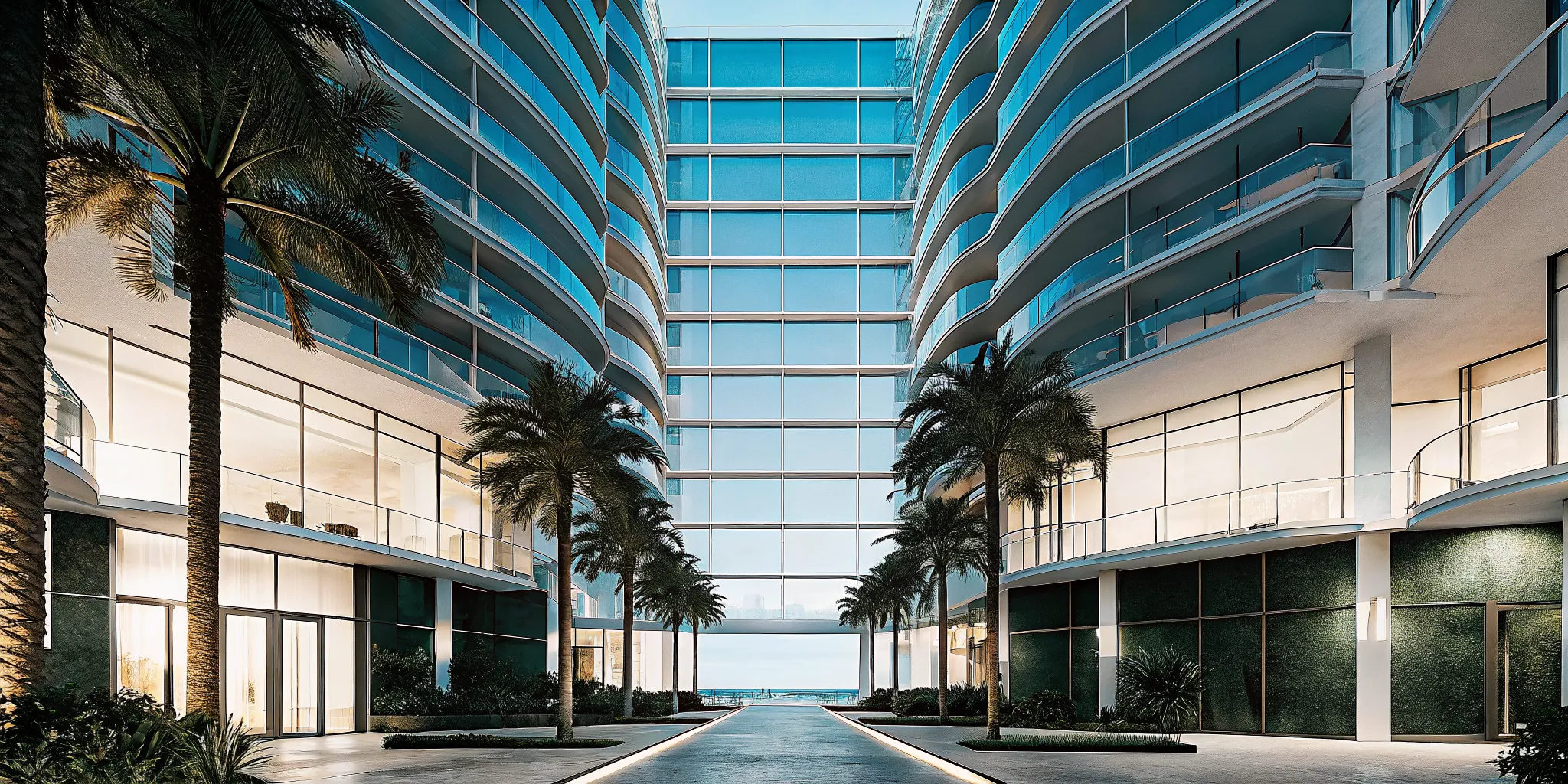
Edgewater offers a quieter relationship with the city and the bay. Its direct Biscayne Bay frontage has supported the development of sought-after luxury high-rises, giving buyers an opportunity to pair urban access with open-water outlooks. The neighborhood can appeal to someone who wants the architectural presence and amenities of a tower, but prefers a more residential atmosphere than Brickell's intense commercial rhythm. The right building matters, particularly when comparing views, services, common areas, and access to waterfront recreation.
Wynwood brings a more creative form of urban living. Once an industrial district, it has evolved into a cultural and artistic hub that attracts residents interested in modern living, galleries, murals, restaurants, and an active social scene. Its appeal is less about conventional formality and more about proximity to the people, ideas, and experiences shaping Miami's contemporary identity. Buyers should assess the immediate block, building quality, parking, and future development context as carefully as the neighborhood's energy.
The best choice depends on the pace you want to come home to. Brickell prioritizes walkability and business access, Edgewater emphasizes bay frontage and high-rise calm, and Wynwood favors art, dining, and cultural momentum. A neighborhood-level analysis can help align those qualities with your priorities before you compare individual residences.
Waterfront and Island Living: Coconut Grove, Key Biscayne, Bal Harbour, Sunny Isles Beach
For luxury buyers, waterfront living is not a single property type or neighborhood profile. It can mean a historic bayfront home with room for a boat, a private island enclave with a quieter pace, or a full-service condominium steps from the Atlantic. The right choice depends on how you use the water, how much privacy you want, and whether beach access, marina convenience, or an active social scene matters most. In Miami, boat access and waterfront property appreciation are frequently part of the same luxury lifestyle conversation, but the daily experience varies considerably by location.
Coconut Grove: Lush, relaxed, and connected to the bay
Coconut Grove suits buyers who want an established neighborhood atmosphere without giving up access to the water. Its relaxed, lush, and artsy character creates a meaningful contrast with the higher-intensity energy of Brickell and Downtown. Mature landscaping, shaded streets, and a strong sense of place make the Grove appealing to residents who value privacy and community interaction. Waterfront buyers should look closely at dock access, water depth, boating routes, and the relationship between the home, marina, and surrounding neighborhood. A property with a beautiful view is not automatically the right choice for an owner who plans to boat regularly.
Key Biscayne: An island-oriented daily rhythm
Key Biscayne offers the distinct feeling of living away from the mainland while remaining part of the Miami area. Buyers drawn to this setting often prioritize beach access, outdoor recreation, and a more contained residential environment. The island perspective can also appeal to relocators seeking an exclusive enclave where daily life feels separate from the city. During due diligence, evaluate access and commute patterns alongside the home itself. Island living is most successful when the location supports your routines, from school and work logistics to boating, tennis, beach time, and entertaining.

Bal Harbour: Service, privacy, and a polished coastal setting
Bal Harbour is suited to buyers who want an elevated coastal lifestyle with proximity to luxury retail, dining, and highly serviced residences. The appeal is less about a casual beach house and more about combining ocean views, attentive building services, security, and convenience. Compare each building's position, exposure, amenities, and rules for ownership and use. For international buyers and frequent travelers, a full-service residence may provide a practical level of support. While buyers seeking a private dock may need to consider a different waterfront submarket.
Sunny Isles Beach: Oceanfront high-rise luxury
Sunny Isles Beach is recognized for ultra-luxury high-rise residences, expansive beach access, and a strong appeal to affluent international buyers. It works well for purchasers who want a lock-and-leave residence with direct access to the sand, panoramic water views, and resort-style services. Building selection matters: review the quality of construction, association operations, amenities, parking, guest policies, and the outlook from the specific unit. For a broader comparison of coastal condominium living, explore Miami Beach waterfront condos.
The strategic takeaway: Match the waterfront setting to the lifestyle you will actually live. Coconut Grove and Key Biscayne can favor a more residential, nature-connected rhythm, while Bal Harbour and Sunny Isles Beach emphasize polished service, beach access, and vertical luxury. A neighborhood-level review should examine the view, the water, the building or community, and the practical route between them.
Gated and guard-gated communities for privacy-focused buyers
For relocators who prioritize security, seclusion, and a managed environment, Miami's gated and guard-gated communities offer a distinct alternative to open waterfront streets. These enclaves can be found across Coral Gables, Coconut Grove, Key Biscayne, and the northern coastal corridor. And their appeal usually turns on controlled access, larger lots, mature landscaping, and a more predictable daily rhythm. A buyer evaluating a gated community should review the association's financial health, reserve funding. Maintenance standards, architectural rules, flood and hurricane considerations, and the actual level of security staffing. The lifestyle value of a gate depends on how the community is operated, not on the entry alone.
Privacy and community interaction can coexist in these settings. Some buyers want a secure, low-commotion base close to airports, schools, and yacht access. Others want a social calendar organized around the club, marina, or golf facilities. Because gated inventory is often limited, the available choice can shift quickly. A neighborhood analysis that connects the buyer's priorities to the current supply is more useful than a static list of addresses. That is where local knowledge of the Miami luxury market directly informs the final shortlist.
What Miami Market Data and Condo Rules Should Buyers Know in 2026?
Market momentum is concentrated, not uniform. In Q1 2026, Brickell and Coconut Grove are identified as Miami's strongest submarkets, but they appeal to different buyer profiles. Coconut Grove had approximately 2.8 months of supply, a relatively tight level that can limit negotiating room for well-positioned homes and condominiums. Sales across Coral Gables and Coconut Grove also rose 44.6% year over year. That signals strong demand in established, lifestyle-driven communities rather than a market moving in one direction everywhere.
Branded residences require a premium analysis. Buildings associated with names such as Mandarin Oriental and St. Regis can command premiums of roughly 30% to 80% compared with otherwise comparable luxury properties. That premium may reflect service standards, hospitality management, amenities, privacy, and international recognition. It should not be treated as an automatic investment return. Buyers should compare the total ownership cost, including association fees, reserves, taxes, insurance, and rental restrictions. The building's operating history matters too, especially against the lifestyle and service value they actually intend to use.
Condo due diligence now includes structural reserves. Florida's Structural Integrity Reserve Studies, commonly called SIRS, have made building records and long-term capital planning central to the purchase process. A buyer should review the association's SIRS materials, recent inspection reports, reserve funding, approved assessments, meeting minutes, engineering recommendations, and pending litigation with qualified professionals. The objective is not simply to identify a current assessment. It is to understand whether the building has a credible plan for maintaining critical structural and safety components over time.
New development can offer a different risk and opportunity profile. Buyers considering a new tower should examine the developer's track record, delivery timeline. Construction specifications, deposit structure, warranty terms, projected association expenses, and the surrounding pipeline of competing inventory. A pre-construction purchase may provide access to a preferred floor plan or finish package. While a completed resale offers more evidence about views, sound, operations, and actual monthly costs. The right choice depends on timing, liquidity, and how closely the property matches the buyer's intended lifestyle.
For current project intelligence and neighborhood context, explore Miami new developments. A disciplined review of both market data and building documents helps luxury buyers choose a property that feels exceptional today and remains comprehensible as an asset over the long term.
How The Maya Vander Group Matches Luxury Buyers With the Right Miami Neighborhood
The right address begins with the right questions. The Maya Vander Group does not treat Miami neighborhoods as interchangeable lifestyle labels. The team starts by understanding how a buyer expects to live, work, host, invest, and spend time with family, then translates those priorities into a focused neighborhood strategy. That advisory approach is especially valuable for clients arriving from New York and other high-tax states. International buyers evaluating a prestigious second home, and affluent families seeking stability without giving up access to the energy of Miami.
Personal priorities shape the first shortlist. A finance or technology professional who wants a walkable routine, dining, and proximity to Miami's "Wall Street South" may be drawn toward Brickell. A family may place greater weight on schools, green space, privacy, and the character of Coral Gables, Pinecrest, or Coconut Grove. An international buyer may prioritize a waterfront setting, full-service amenities, security, and concierge-level ownership. These are not simply preferences to note after a showing. They determine which properties deserve serious analysis in the first place.
Local context turns broad preferences into useful decisions. Led by Maya Vander, a full-time Miami resident, and affiliated with Compass Real Estate. The Maya Vander Group brings an on-the-ground understanding of how each area feels beyond its listing language. The team considers walkability, commute patterns, school and family infrastructure, waterfront access, building quality, development activity, and the rhythm of daily life. For analytical buyers, that local perspective is paired with market intelligence, including current supply, submarket momentum. Pricing context, and the point in the market cycle at which a property is being evaluated.
A concierge process for relocators
Relocation requires more than a property tour. The Maya Vander Group helps buyers compare neighborhoods before they commit to a search area. Coordinates a more efficient viewing strategy, and identifies practical questions that can be easy to miss when purchasing from outside Miami. The process can include virtual consultations, neighborhood analysis, introductions to trusted professionals, and guidance through the operational details of a move. The goal is not to steer every buyer toward the same destination. It is to make the trade-offs visible so the buyer can choose with confidence.
Market-cycle guidance protects the lifestyle decision. A neighborhood may be compelling for its architecture, amenities, or waterfront access, while the individual property still requires careful review of condition, carrying costs, regulations, and resale context. The Maya Vander Group connects the emotional appeal of a Miami lifestyle with the disciplined due diligence expected in a luxury purchase. That is what turns a miami neighborhood guide for luxury buyers and relocators into an actionable plan rather than a collection of attractive descriptions.
Frequently Asked Questions
Where do most luxury buyers choose to live in Miami?
There is no single answer because luxury demand spans distinct lifestyles. Brickell suits buyers who want walkability, restaurants, professional amenities, and an active urban setting. Coral Gables, Coconut Grove, Pinecrest, and other established areas appeal to buyers prioritizing privacy, greenery, family infrastructure, and a more residential rhythm. Waterfront enclaves such as Edgewater and Sunny Isles Beach attract buyers who value bay or ocean access, high-rise services, and expansive views.
Which Miami neighborhood is best for families?
Coral Gables, Pinecrest, Coconut Grove, Palmetto Bay, and Miami Shores are strong starting points for a family-oriented search. Coral Gables is known for historic character, tree-lined boulevards, and golf amenities, while Pinecrest and Palmetto Bay offer a more spacious suburban setting. The right choice depends on school priorities, commute, property type, outdoor space, and how much access the family wants to dining and cultural activity. Verify current school options and boundaries before making an offer.
Is waterfront property necessary for a luxury Miami lifestyle?
No. Waterfront living can provide boat access, views, and a distinctive resort experience, but inland neighborhoods may offer greater privacy, larger lots, mature landscaping, and stronger family-oriented infrastructure. A careful comparison should consider the buyer's daily routine, insurance and maintenance expectations, access to the water, and preference for a private home versus a full-service condominium.
What should relocating buyers evaluate beyond the neighborhood itself?
Look beyond the address to building condition, security, services, commute patterns, airport access, schools, taxes, insurance, and future development. Condo buyers should also review association finances, assessments, reserves, and required structural documentation. High-end buildings may offer smart-home features, fitness centers, spas, and valet services, but those amenities affect recurring costs. A neighborhood analysis should connect the lifestyle fit with the property's long-term ownership profile.
Ready to Find Your Miami Neighborhood?
A thoughtful neighborhood match can help you compare lifestyle, location, and long-term fit with greater clarity. To discuss your priorities and next steps, schedule a consultation with The Maya Vander Group.
Schedule a consultation with The Maya Vander Group.
Ready to Explore Luxury Real Estate in Miami?
Don't miss opportunities in one of Florida's most desirable markets. Contact Maya Vander today for exclusive access and personalized service.


