
Miami Waterfront Home Flood Elevation
Miami waterfront home flood elevation is the height of the lowest floor compared with the height floodwater is expected to reach on that lot. A view of the bay does not tell you that number. Before you offer, ask for the elevation certificate, compare the lowest floor with the base flood elevation, and find out what a shortfall would mean for insurance and future work.
Compare Miami waterfront listings
What flood elevation measures on a waterfront home
An elevation certificate records how high a building sits relative to expected floodwater. FEMA's National Flood Insurance Program describes that comparison, including first floor height. First floor height is the height of the lowest floor above the ground. Insurers use that record to judge flood risk. A higher lowest floor is generally less likely to flood, and the certificate can point to a premium discount. It does not, by itself, set the rate.
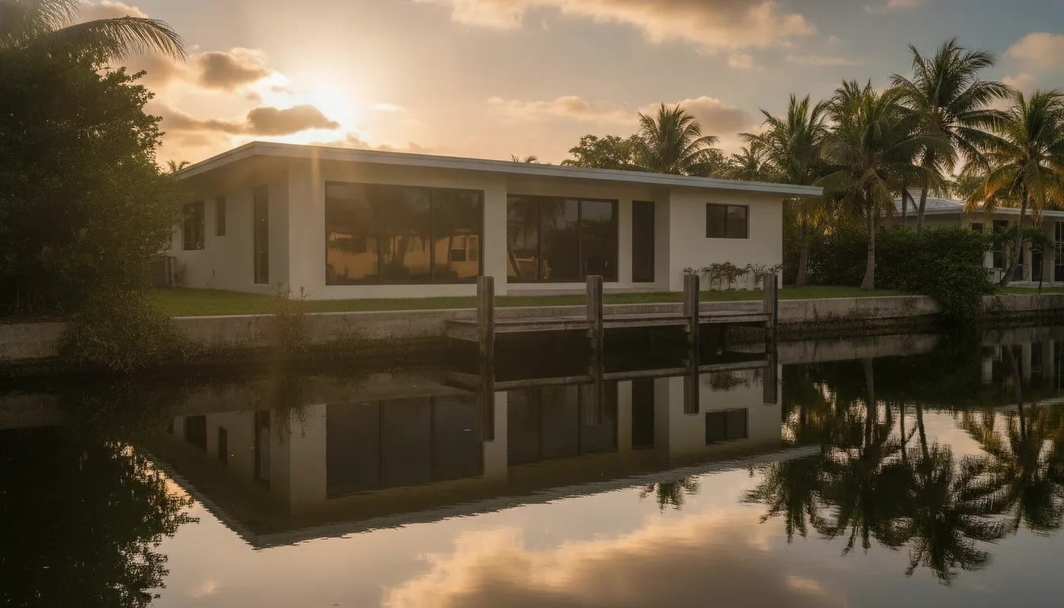
On a Miami waterfront lot the number matters more than the listing photo. A canal house, a bayfront house, and a home a block from the water can share a neighborhood and still sit at different heights. The certificate is property-specific. It is not a neighborhood average, and a "waterfront" label is not a flood-zone designation.
Read two figures together. The lowest floor elevation is where the living floor sits. The base flood elevation is the height floodwater is expected to reach in a base flood for that mapped area. When the lowest floor is at or above that line, the house meets the height the map uses as its reference. When it sits below, water is more likely to enter during that flood, and later repairs or renovations can trigger a requirement to raise the house.
Miami-Dade County explains the practical consequence on its elevation certificate page. If the certificate shows the house is lower than the required elevation, the 50 percent rule can apply. If a flood-zone house is damaged or improved by more than 50 percent of its market value, it has to be raised to the current elevation requirement. That is a cost and timing question, not a footnote.
Where the certificate comes from
Miami-Dade has collected FEMA elevation certificates from builders as a building-permit requirement since 1995. Homes built after that year may already have a certificate on file. The county points buyers to its Elevation Certificate Search for those records. If a post-1995 home does not appear, the county may still hold a certificate that has not been scanned, and its flood information line is 305-372-6466.
A home built before 1995, with no substantial improvement and no substantial damage since, often has no county certificate. The county says you may need a surveyor, or you can ask the prior owner for one they already ordered. FEMA's guidance is the same shape: ask the local floodplain office first, and if nothing is on file, hire a land surveyor, engineer, or architect to complete a new certificate.
Do not treat a missing file as proof the house is high enough. Older waterfront houses are exactly the ones most likely to sit below today's requirement. Ask the seller for the certificate in writing during the inspection period, and leave enough time for a new survey if the file is empty. A survey is a closing document, not a weekend errand.
The county also requires a flood-zone disclosure when improved property in a Special Flood Hazard Area or Coastal High Hazard Area is sold. A zone call to the same flood line, or the county flood map, tells you the designation. The certificate then tells you the height inside that zone. You need both. The FEMA Map Service Center is where official flood maps, and letters that amend or revise a map, can be viewed.
How to read Miami waterfront home flood elevation
Start with the address on the certificate. Confirm it is this house, not a neighboring lot or an older survey of a different structure. Then find the flood zone, the base flood elevation, and the lowest floor elevation. The gap between the lowest floor and the base flood elevation is the figure that changes the conversation. A floor several feet above the line is a different house from one a foot below it, even when both face the same canal.
Also note what "lowest floor" refers to. An enclosure, a garage, or storage built below the living level can sit in the flood path even when the main rooms are higher. FloodSmart treats a basement separately because it is below ground, and it is recorded as its own risk. Ask the surveyor which floor was measured, and whether any lower area is finished living space.
Machinery matters on the water. Air-conditioning pads, electrical panels, and water heaters installed below the required height are common on older canal houses. The certificate and a current survey should show where that equipment sits. Replacing it later, if the work crosses the 50 percent threshold, can pull the whole house into a requirement to elevate.
| What you are reading | What it tells you | What to ask next |
|---|---|---|
| Lowest floor elevation | How high the measured floor sits | Is this the living floor, or a lower enclosure? |
| Base flood elevation | How high base-flood water is expected to reach | Is the floor at, above, or below that line? |
| Flood zone | Whether the lot is in a mapped special flood hazard area | Does the sale require a flood-zone disclosure? |
| Certificate date and source | Whether the record is current and for this structure | Is a new survey needed before the inspection period ends? |
What a low reading changes before you offer
A floor below the base flood elevation does not automatically end the purchase. It changes the budget and the paperwork. Ask an insurance agent for a flood quote that uses the certificate, not a guess based on the street. FloodSmart says most homeowners do not need a certificate to buy a policy. The exception is high-risk Zone A and coastal Zone V, where it may be needed to show the home meets local standards. On the water, get the quote anyway. The certificate can document a height that lowers the premium, or it can show why the premium is high.
Then price the 50 percent rule as a future project, not only as storm damage. A kitchen renovation, a new roof, or repairs after a flood can cross half the market value and force the house up to the current elevation. County rules also put an inspection hold on new construction and substantial additions until an under-construction certificate shows the floor, the adjacent grade, and the crown of the road. If you plan to add a wing or lift the house, that hold is part of the timeline.
Write the elevation result into the offer conditions. If the certificate is missing, the contract should allow a survey before you waive inspection. If the survey shows the floor below the required height, you should still be able to revisit price, insurance, or whether to proceed. The Miami waterfront homes guide covers how to choose the house itself. This check is the height question that guide does not answer.
Questions to ask on a specific waterfront house
Use the same short list on every waterfront candidate so the comparison is about height and records, not about the view.
- Is there an elevation certificate on file, and what year was it signed?
- What is the lowest floor elevation, and what is the base flood elevation?
- Does any finished space, garage, or mechanical equipment sit below that line?
- Has the house had a substantial improvement or substantial damage since the certificate?
- What flood premium does a current quote show once the certificate is attached?
Neighborhood context still belongs on its own page. A Coral Gables flood zone house check answers a different local zone question. The Pinecrest flood insurance and millage guide covers that village's bill, not a bayfront certificate. A Miami beachfront buyer guide compares oceanfront property types. None of those replaces the certificate for the house in front of you.
Two waterfront houses on the same canal can differ by several feet of floor height. One may already sit above the mapped line because it was built under a later permit. The other may be an older house whose living level was set for a lower standard. The listing will not say which is which. The certificate will. Ask for it before a second showing so you are not comparing a compliant floor with a house that would have to be lifted after the next major repair.
Keep the survey separate from the general home inspection. A home inspector can describe moisture, prior water lines, and the condition of a seawall. An elevation certificate is a surveyed height, signed by a surveyor, engineer, or architect. If the seller's copy is more than a few years old, ask whether any addition, enclosure, or slab work happened after the survey date. Work done later can change the lowest floor the certificate describes.
Also ask how the lot drains after a hard rain, not only how high the floor sits. A house can clear the base flood elevation and still take water from a low yard, a clogged canal outfall, or a neighbor's fill that pushes runoff toward the lot. The certificate does not measure that. A site visit in daylight, plus the surveyor's note on adjacent grade, is what shows whether the yard itself ponds.
If you plan to enclose a lower level for a gym, office, or guest room, stop and read the rules first. Finishing space below the required elevation can count as a violation and can change how the lowest floor is measured. Storage and parking below the living floor are treated differently from habitable rooms. Get that answer from the surveyor and the building department before you price a renovation into the offer.
Put the result next to your insurance quote and your renovation plans. A house above the line, with equipment raised out of the flood path, is a simpler hold. A house below the line can still be the right purchase if the price reflects a future lift and a higher premium. What you should not do is waive the inspection and discover the gap at closing. When you are ready to test real candidates, search current Miami listings and ask for the certificate before you tour a second time.
Records to collect before the inspection period ends
Give yourself a paper stack, not a verbal assurance. Ask the listing side for the elevation certificate, the flood-zone disclosure, and any letter that changed the mapped zone for this lot. A Letter of Map Amendment or a Letter of Map Revision can move a parcel relative to the floodplain. If one exists, read it with the certificate rather than assuming the old zone still applies. The FEMA Map Service Center is the place to confirm the current map panel.
Match the certificate's building diagram to what you see on site. A diagram for a house on a crawlspace is not the same as a diagram for a house on fill or on an enclosure. If the drawing shows an open area under the floor and the visit shows a finished room, the certificate may be stale. That mismatch is a reason to order a new survey, not a reason to average the two descriptions.
Ask the seller these three dates in writing: the year the house was built, the year of the last substantial improvement, and the date of the last elevation certificate. Miami-Dade's file is strongest for work permitted since 1995. A remodel that never pulled a permit will not appear there, but it can still change the floor you are buying. Your inspector and your surveyor should both see those dates before they sign off.
Bring the same stack to the insurance conversation. A quote built from an address alone can miss a floor that sits two feet below the mapped line, or it can miss a floor that clears it. Attach the certificate and ask the agent to say which figure moved the premium. Save that quote with the offer file so the number is not renegotiated from memory a week later.
Frequently asked questions
What is a Miami waterfront home flood elevation?
It is the height of the home's lowest floor compared with the base flood elevation for that lot. The elevation certificate is the document that records the comparison. A waterfront setting does not tell you the number.
Does every Miami waterfront home already have a certificate?
No. Miami-Dade has collected certificates for permitted new construction and substantial improvement since 1995. Older homes with no substantial work since then often need a new survey, or a copy from a prior owner.
Will a higher elevation lower flood insurance?
It can. The certificate documents first floor height and other features insurers use to judge risk, and a higher floor is generally less likely to flood. It does not set the premium by itself. Ask for a quote that uses the actual certificate.
What happens if the lowest floor is below the required elevation?
Miami-Dade's 50 percent rule can apply. If the house is damaged or improved by more than half its market value, it has to be raised to the current elevation requirement. Price that possibility before you waive inspection.
Call The Maya Vander Group at 310-902-3682 to review a waterfront home's elevation certificate before you write an offer.
Ready to Explore Luxury Real Estate in Miami?
Don't miss opportunities in one of Florida's most desirable markets. Contact Maya Vander today for exclusive access and personalized service.
© 2026 THE MAYA VANDER GROUP. All Rights Reserved. Trademarks and brands are the property of their respective owners.


