
Townhomes for Rent: Questions Before You Sign
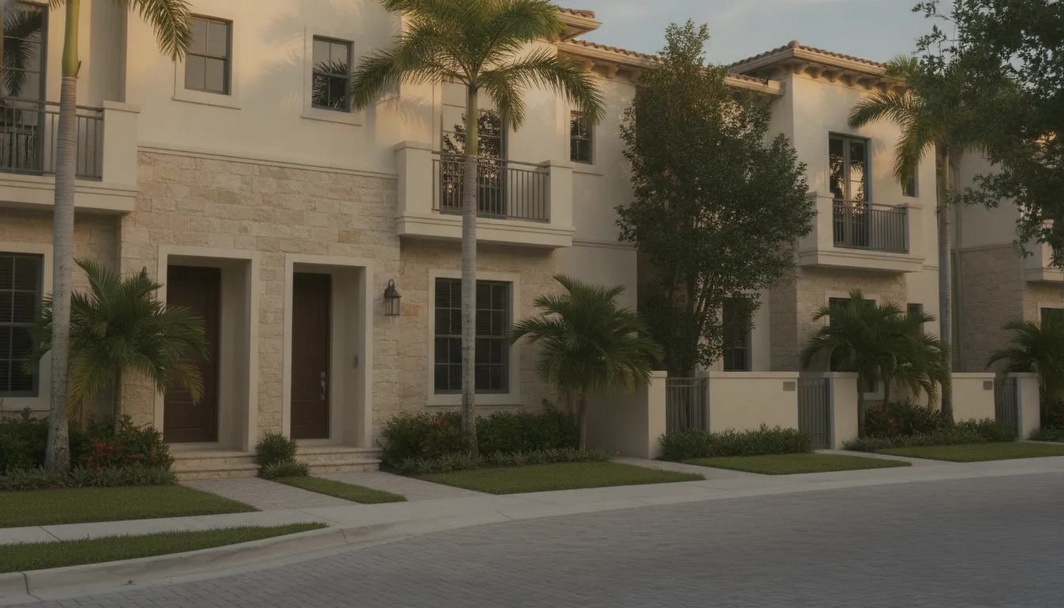
Townhomes for rent look like a house from the sidewalk and like a condo in the paperwork. You get a private door, often a garage, and usually more room than an apartment. You also share a wall, a roof line, or a yard rule with neighbors, and an association can sit on top of the lease. The useful question is not "is a townhome nicer." It is what the lease, the association, and the insurance actually cover before you sign.
This guide is for a renter comparing Miami townhomes, not a buyer writing an offer and not a roundup of today's listings. Current homes sit on the property search. The checklist below is the part listing sites skip: who maintains what, which rules bind you, and which papers to read before the deposit is hard to unwind.
What Townhomes for Rent Actually Include
A townhome rental is a lease of a dwelling, not a purchase of the building. The landlord owns the home, or controls it, and you pay rent for a term. In Miami that home may sit in a small row, a gated community, or a building the listing calls a townhome even when the legal form is a condominium.
That label changes the rules. A true townhome often has its own lot and its own exterior. A condo-style townhome can share a roof, a driveway, and an association budget. Ask which one you are renting before you compare floor plans. The floor plan will not tell you who pays when the shared roof leaks.
Most luxury searches want three things a high-rise apartment does not give: a ground-floor entry, parking you control, and space for a household. Those perks are real. They do not replace a written lease, a walk-through, or a flood disclosure on a lease of one year or longer.
If you are also looking at towers, read how Brickell apartments for rent fit a luxury search, then come back to the townhome questions. The two products fail in different places. An apartment fails on building rules and monthly fees. A townhome fails on shared walls, exterior repairs, and association limits the listing never mentions.
Questions to Ask Before You Sign
Ask these in writing, and keep the answers with the lease. A verbal "the HOA is fine with renters" is not a term you can enforce later.
- Who is the landlord, and who collects rent? Confirm the owner or the manager, the payment address, and whether an association fee is separate from rent.
- What is included in the monthly number? Split base rent, association dues if you pay them, parking, storage, water, and any admin fee. Ask which of those can rise during the term.
- What is the term, and how does it end? Note the start date, the end date, renewal, and the notice each side must give. Florida does not give you a grace period to cancel after you sign.
- Who fixes the interior, the exterior, and shared parts? Get the split in the lease: appliances, AC, roof, exterior paint, irrigation, and the shared wall.
- Which association rules bind a tenant? Ask for the rental section, pet rules, guest parking, and any minimum lease length. If the association must approve you, ask how long that takes.
- What insurance must you carry, and what does the owner carry? Renters insurance is not flood insurance. Ask what the owner's policy covers and what it leaves to you.
- Has this home flooded, and where is the disclosure? For a lease of one year or longer, Florida requires a separate flood disclosure at or before signing.
- How is the deposit held, and when is it returned? Ask the amount, whether any part is nonrefundable, and the account or bond the landlord uses.
Walk the home before you sign. Photograph damage, date the photos, and attach a short condition list both sides sign. The Florida Department of Agriculture and Consumer Services tells renters to do that walk-through first, because a signed lease is binding. There is no cooling-off window after the signature.
Lease, Deposit, and Flood Papers
Three Florida rules matter more than the staging photos. They come from the landlord-tenant statutes and from the state's consumer summary of that law. They are not a substitute for a lawyer if the lease is unusual, but they tell you which blanks to fill.
First, the deposit. Florida Statutes section 83.49 covers money held as security. It also covers advance rent past the next rental period. That money must sit in a separate Florida account for the tenant, or the landlord must post a surety bond. The landlord may not mix that money with other funds until it is actually due. If the account pays interest, the statute sets how much of that interest comes to you. Ask which of the three options the landlord uses, and get it in the lease.
Second, advance rent. Pay it only when you have decided to take the home. The state consumer guide warns that a tenant who pays ahead and then decides not to move in may not get that money back, unless the lease says otherwise. If a fee is nonrefundable, the lease should say so in plain words.
Third, flooding. Section 83.512 requires a flood disclosure in a separate document. The landlord gives it to a prospective tenant at or before a rental agreement of one year or longer. The form covers the landlord's knowledge of flood damage, insurance claims, and assistance such as FEMA aid. A renters policy does not cover flood. If the landlord skips the disclosure and a flood causes a substantial loss of your belongings, you can end the lease in writing. You must return the home within 30 days of that loss. The statute calls the loss substantial when repair or replacement costs reach half the property's market value.
Read the disclosure against the street, not against the brochure. A townhome one lot off the water can still take rainfall that stands in a garage or a ground-floor bedroom. The form's own definition of flooding includes overflow, rapid runoff, and standing rainwater. If the boxes say the landlord has no knowledge, that is a statement to keep, not a promise the lot has never been wet.
Shared Walls, HOA Rules, and Insurance
The downside people feel first is noise and control, not the rent. A shared wall means the neighbor's hours are part of your lease. Ask what quiet hours the association posts, whether short-term guests are limited, and whether you can alter the yard, the paint, or a lock.
Association approval is the delay that surprises out-of-town renters. Some communities must review the lease, the occupants, and a pet before you get keys. Ask whether approval is required, what the fee is, who pays it, and what happens to your deposit if the board says no. Do not wire moving costs until that answer is written.
Insurance is three layers, and people mix them up. The association may insure shared structures. The owner may insure the interior they are required to cover. Your renters policy covers your belongings and, often, liability. None of those three is flood insurance. If you will keep a car, art, or a home office on the ground floor, price a separate flood policy before you treat the rent as the full monthly cost.
Parking and storage should be exhibits, not adjectives. "Two-car garage" should name the spaces and say whether a second car can use guest parking overnight. If the community is gated, ask how guests enter and whether the gate fee is in the rent.
| Question | Why it matters | What to get in writing |
|---|---|---|
| Who maintains the exterior and shared wall? | A leak or paint job can land on you if the lease is silent. | A repair split for roof, wall, AC, and appliances. |
| Does an association have to approve the lease? | You can lose weeks, or the home, after you have planned a move. | The rental rules, the fee, and the timeline. |
| Where is the security deposit held? | Florida requires a separate account or a surety bond. | The 83.49 option the landlord uses. |
| Was a flood disclosure provided? | Leases of one year or longer need a separate form. | The signed 83.512 disclosure. |
| Which insurance do you still need? | Renters insurance does not cover flood. | Owner, association, and flood responsibilities. |
Neighborhood fit is a separate decision from the lease. Coral Gables and Coconut Grove show up again and again when people ask for townhomes, because the streets are residential and the homes have doors of their own. Start with the Coral Gables homes page and the Coconut Grove homes page for area context, then filter rentals rather than treating a buyer guide as a lease. For a purchase, the checks change: the Pinecrest luxury guide and the Miami Shores homes guide cover buying, not renting.
How to Compare Miami Townhome Rentals
Compare homes on the same monthly picture. A lower rent with a large association bill, a mandatory insurance package, and a nonrefundable admin fee can cost more than a higher rent with those items included. Write one all-in number for the first month and one for a typical month.
Then compare control. Rank the homes by the repair split, the association rules, and the flood form, not by the sofa in the photo. A townhome you cannot paint, cannot park in, and cannot insure the way you live is a weak lease even when the kitchen is new.
Use the live search for inventory. On Miami property search, the rental property type is the right filter for homes currently offered to lease. An article cannot stay current with asking rents, and it should not pretend to. If a townhome you want is off the public list, ask the Maya Vander Group to check it with you rather than guessing from a portal average.
Give each finalist the same pass. Confirm the landlord, the all-in month, the repair split, the association approval, the deposit account, and the flood form. If one of those six is missing, you are not ready to sign, even when the photos are strong. A townhome lease is still a lease. The private entry does not change the papers.
When you want a second set of eyes on the lease, the association rules, or a specific Miami townhome, contact The Maya Vander Group or call 310-902-3682.
Frequently Asked Questions
Are townhomes cheaper to rent than houses or condos?
Sometimes, and the listing sites do not agree on a single Miami average. Compare the all-in month, not the headline rent. Add association dues, parking, required insurance, and any fee the lease will not refund. A cheaper townhome with a strict board can cost more in time than a higher apartment rent.
What credit score do you need to rent a townhome?
Florida law does not set a statewide credit-score minimum for townhomes. The landlord or the association sets the screen, and it can include income, rental history, and an approval packet. Ask for the written criteria before you pay an application fee you cannot recover.
What is the downside of a townhome rental?
You share a wall or a roof line, and an association may limit pets, guests, parking, and changes to the home. You also depend on the lease to say who fixes the exterior. The private door is the benefit. The rules are the part to read twice.
Does renters insurance cover flood damage?
No. Florida's flood disclosure says renters policies do not cover flood damage and points tenants to a separate flood policy. Ask for the disclosure on any lease of one year or longer, and price flood coverage if your belongings sit on the ground floor.
Can you cancel a Florida lease after you sign?
Do not count on it. The state consumer guide says there is no grace period to cancel a rental agreement once you sign. Ending early depends on the lease and on narrow statutory cases, including a flood-disclosure violation that leads to a substantial loss. Read the exit terms before you sign, not after the truck is booked.
Ready to Explore Luxury Real Estate in Miami?
Don't miss opportunities in one of Florida's most desirable markets. Contact Maya Vander today for exclusive access and personalized service.
© 2026 THE MAYA VANDER GROUP. All Rights Reserved. Trademarks and brands are the property of their respective owners.


